Category Archives: Music

All Beatles Songs Ranked…

Over at vulture.com, Bill Wyman offers his review of every single one of The Beatles songs.  Given that I love reading lists and I love the music of The Beatles, this was an intriguing list to go over.

If you’re interested in reading this as well, here’s the link to the article…

All 213 Beatles Songs, Ranked From Worst to Best

While I’m absolutely certain almost everyone who stumbles upon and reads this list will have issues with it (I certainly did), one must of course realize a) opinions are just that and are unique to almost everyone and b) this is obviously Mr. Wyman’s opinion of the worst to best songs.

Reading the list, its clear Mr. Wyman subscribes to the notion some have that Paul McCartney’s songs tend to be “fluffier” and more “pop” and “lighter” in message than John Lennon’s more “serious” and “artsy” works.

Nonetheless, he does offer plenty of negatives toward John Lennon, in particular noting that the quality of his songs tended to slide as he did into a haze of drugs.

Having read the list, I can’t help but think of what my top ten favorite Beatles songs are.  I’ll give it a shot here, but please note these songs are not listed in any particular order:

A Day In The Life – Presented at the tail end of Sgt. Pepper’s Lonely Hearts Club Band, this sober, at times eerie song nonetheless features a trippy middle.  Fascinating, fascinating song.

Hey Jude – While some may argue the song is overlong, I feel it merits its length.  A great piece of work.

Rain – Wonderful John Lennon song that reportedly was the first, in its tail end, to use backward masking.  Love the song and its message.

She Said, She Said – Another wonderful John Lennon song, its title inspired by a conversation John Lennon had with Peter Fonda at a party.  Love the guitar and drum work.

Golden Slumbers/Carry That Weight/The End medley – I suppose this is something of a cheat as these are fragments of songs put together to make a larger song at the end of the album Abbey Road yet when the Golden Slumbers part starts to the end of The End you’re into a great work.

In My Life – Another great John Lennon work, this one features great lyrics and is just a terrific song.

Helter Skelter – Perhaps one of the earliest examples of heavy metal music!  Paul McCartney goes crazy in a crazy, crazy song.  Love it!

Yesterday – Those who know Beatles lore know that Paul McCartney did this song pretty much single-handedly.  According to Mr. McCartney, he awoke one morning with this song in his head.  He figured it was an already published work yet went ahead and, with breakfast on his mind, created nonsense lyrics around the song (“Scrambled eggs” versus Yesterday!).  When he brought it to the other Beatles he realized it was a new song and, voila, a classic was created.

Here Comes The Sun – George Harrison, especially toward the end of The Beatles’ run, created some terrific songs.  This is probably his best.

While My Guitar Gently Sleeps – And this would be, IMHO, George Harrison’s second best, but not by much!  Terrific Eric Clapton guitar work on this song.

This list of 10 comprises songs which are currently on my mind and ignores SO MANY great songs –Get Back, Strawberry Fields Forever, Revolution, Let It Be, The Long And Winding Road, Back in the U.S.S.R., Nowhere Man, Lady Madonna, Help!, Tomorrow Never Knows, Eleanor Rigby, etc. etc. etc. that it seems almost silly to list just these.  (Note I just listed 11 songs that could just as easily be in The Beatles’ top ten!)

Now, on the opposite end of the spectrum…Which song would I consider The Beatles’ worst?

There are plenty of songs, especially in the early albums, which don’t turn me on.  Some are covers (though they did some absolutely smashing covers as well!) and some are original songs.

I don’t like Run For Your Life, though this is mostly because of the misogynistic message it offers.  I’m not particularly enamored of Only A Northern Song.  There are others here and there I could mention but if there’s one song I really don’t like its:

Revolution #9

An experiment in sonic…something or another… Revolution #9 is presented on the tail end of the otherwise damn fine “White Album” and I’ll listen to maybe a minute or so of it before tiring and hitting the “next” button.

Your mileage, as they say, may vary!

Rainy days…

We’re in day four (or thereabouts) of rainy weather and its a little past 9 AM as I type this and it looks like late evening out there…

These are the types of days you don’t want to leave the house!

The Beatles: Sgt. Pepper’s Lonely Hearts Club Band (2017 remix)

Wow.

Just released today to coincide with the (gulp) 50th year anniversary release of what is likely the most famous of The Beatles’ albums (though, as I mentioned previously, many feel it isn’t necessarily their best album), you can now pick up various editions of the new, 2017 remix of Sgt. Pepper’s Lonely Hearts Club Band.

Image result for sgt. pepper's lonely hearts club band 50th anniversary

There are inevitably going to be those who wonder if its worth buying this edition of the album.  If you’re like me, you’ve picked up many different editions of the album and, going in, wonder if this one will be all that much different.

It is.

Oh man, is it.

But don’t take my word for it.  Over on rollingstone.com, Mikal Gilmour offers a review of the album.  You can check the review out here:

Review: The Beatles’ Sgt. Pepper’s Anniversary Edition Reveal Wonders

One of the more fascinating things Mr. Gilmour points out is the following, found in the liner notes of this new edition of the album:

Giles Martin (son of the famous George Martin, the original producer of these albums who passed away in 2016 and the man who did the remix for this new 2017 version of Sgt. Pepper’s) observes in his liner notes: “The original Sgt. Pepper’s Lonely Hearts Club Band was primarily mixed as a mono album. All care and attention were applied to the mono LP, with the Beatles present for all the mixes. … Almost as an afterthought, the stereo album was mixed very quickly without the Beatles at the sessions. Yet it is the stereo album that most people listen to today.” In other words, popular music’s most elaborate and intricate creation – and one that helped end the mono era – wasn’t made to be heard in stereo. 

Though they didn’t know it at the time, mono was on its way out and would be replaced by stereo music shortly after the release of this album.  But because of the time it was created, all the care was made toward the mono mix of this album and the stereo mix, the mix most of us have heard/listened to all this time, was a version The Beatles didn’t really bother with.  The mono version was what The Beatles intended us to hear yet what we heard was… something else.

The 2017 remix of this album intends to correct this error and, trust me, they’ve done it.

Listening to the 2017 remix of Sgt. Pepper’s is -and I know this is going to sound like a cliched bit of selling- nothing short of a revelation.  The music feels far more lush than it ever did before.  There is a multi-level to it that makes you feel like you’re right in the middle of the band as they present their songs.

One of the biggest surprises, at least to me, turned out to be the song Good Morning, Good Morning.  Here’s a demo version of it…

I must admit, I never thought all that much of the song.  Of all John Lennon’s works, I always felt this one was slight, perhaps no better than “ok”.

But in this 2017 version?

…Oh… my.

The song engulfs you with a frantic, crazed energy.  The almost circus like music swirls and surrounds you, hitting your ears as if taking several gunshot blasts.

And that’s just one song!

If you’re a fan of The Beatles and/or Sgt. Pepper’s, do yourself a favor: Toss all the other copies of the album you have and get yourself the 2017 version, then give it a listen and see if I’m wrong.

I don’t think I am and, yes, this new mix of the album is that good.

Highly recommended.

Sgt. Pepper’s at 50…

While there are those who would argue which of The Beatles’ albums was their very best (I’ve heard more than a few state it was Revolver), I suspect few will argue Sgt. Pepper’s Lonely Hearts Club Band is their most famous/well known album.

Personally, I love almost everything about the album, though there are a few songs on it that… well, they may not be quite as good as some of the others.

This year, Sgt. Pepper’s reaches a milestone, having been released an incredible 50 years ago.  To celebrate the occasion, new releases of the album are being unveiled, many offering a very intimate look at the creative process by giving us early “takes” of the many songs.  These collections, it should be noted, will be going for some mighty big bucks, should you want them.

As I was perusing the internet, I stumbled upon this fascinating article by Annie Zaleski for Salon.com which posits the following question:

Sgt. Pepper’s at 50: Was It A Concept Album Or An Identity Crisis?

Many view Sgt. Pepper’s as a concept album -one of the first ever made- but the reality is that apart from the opening chorus, the follow up song A Little Help From My Friends, and the closing chorus, there is little that makes this a concept album, at least when compared to works such as Pink Floyds’ The Wall or The Who’s Tommy or David Bowie’s 1. Outside, each of which tell a story through their songs.

The author of the article points out that John Lennon noted as much, stating his contributions/songs on the album could have easily been in any of the other Beatles albums.

And yet…

Far be it for me to argue with one of the people/musical geniuses behind the album, but I feel Sgt. Pepper’s is a concept album.

A very loose one, I grant you, but a concept album nonetheless.

It starts as a concert, then we have each of the fictional members of the band give us their song, culminating in the concluding Sgt. Pepper’s reprise and, because we’re getting a concert, of course it’s followed by an encore (A Day In The Life).

Unlike other concept albums, there is no “big” overarching story here, except for the ones within each of the individual songs themselves, yet to me Sgt. Pepper’s is ultimately a role-playing concert performed by The Beatles, who by that point could no longer tour.  They couldn’t do so because audiences simply drowned out their music/singing and things were too dangerous.

So with Sgt. Pepper’s, The Beatles offer a simple, elegant concept, that of them doing a concert and giving fans their latest songs.

A simple idea, but a concept nonetheless.

The album, in my opinion, deserves very much being considered one of The Beatles’ greatest albums, even if one may like Revolver a little bit more… 😉

Well that’s annoying…

Early last year I was delighted (though soon became very saddened) by the release of not one, not two, but three albums in those early months I was interested in.

The first to arrive, David Bowie’s Blackstar, was a delight but things got really sad really quickly when a couple of days after the release of the album Mr. Bowie passed away.

The other two albums I was interested in were released by heavy metal artists I’d been following many years, Megadeth’s Dystopia and Anthrax’s For All Kings.

I bought both albums and enjoyed them though I must admit neither album turned me on as much as some of the classic material either band released during their best years.

Nonetheless, I happily bought the product and was content to add them to my collection.

That is, until a friend pointed out Anthrax did a cover of Kansas’ hit song Carry On A Wayward Son

I was intrigued with the son.  Anthrax did a damn good job of covering the song, IMHO, and I was interested in getting it.

Curious as to where I could pick it up I did a search of Anthrax tunes on Amazon, where I bought For All Kings and realized to my horror that this song, along with two others, was available on the deluxe version of For All Kings.

Now, why was this realization made to my “horror”?

Because I bought the “regular” version of the album through Amazon and was not aware a “deluxe” version was in the works or even released until a week or so ago, the purchase I made, which has 11 of the 14 songs on the “deluxe” version, is nonetheless considered by Amazon a completely separate entity from the “deluxe” edition.

Therefore, the three bonus songs on the “Deluxe” edition, Vice of the People, Carry On A Wayward Son, and Black Math, have to be bought separately.

Which would be OK except… you can’t do that.  Not all three songs, anyway.  Not through Amazon.

While I could -and did!- buy both Vice of the People and Carry On A Wayward Son for $1.29 a pop, the song Black Math is an “album only” exclusive.

In other words, if I want to get that last song, I need to buy the entire “Deluxe” album ($10.41 at this moment) to get it.  Which means I have to essentially re-purchase the entire “regular” album -and the two bonus songs I already purchased- to get that one extra song!

What kind of crap is that?!?

So I had to look around and found, to my delight, the song was available through iTunes.

So, its another $1.29 to spend…all in the pursuit of something I really wish had been made known back when the album was originally released in early 2016.

I know, I know…first world problems.

Where did the weekend go?!

Ever feel like someone hit the cosmic “fast forward” button and time is flying by at a breakneck speed?

Oh well…only five days to the weekend! 😉

Back….to the Future!!!

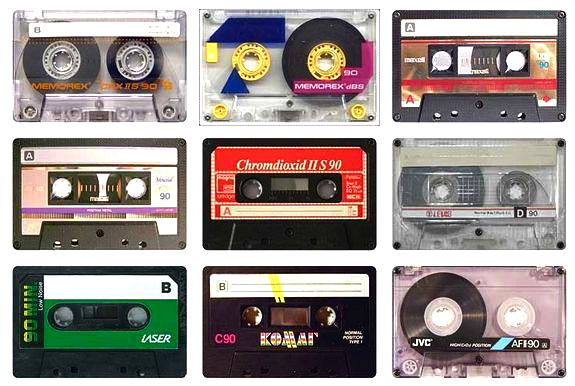
When I was (much) younger, there were two major ways to own music: Either through vinyl records or cassette tapes.  Yeah, for a brief moment there you could buy 8-Track Tapes and there were reel-to-reel tapes (a rarity), but this, my friends, was it:

Image result for vinyl records

Image result for cassette tape

Then came the CD…

Image result for cd

The CD pretty much spelled the end, and in a fairly short period of time, for Vinyl and Cassette tapes.

Why?  Because it was the proverbial better mouse-trap.  You could store more music on a single CD versus Vinyl albums and many cassettes.  CDs were also small enough that you could take them anywhere, including -very importantly!- to your car to play them on a CD player.  But the most important thing CDs provided, in my humble opinion, was durability.  Unlike Vinyl albums or cassette tapes, CDs didn’t degrade.  They appeared to last forever.

Then came the MP3 file.

Suddenly, you didn’t need to have actual physical media but rather some kind of memory device and, almost overnight, the CD became an afterthought.

This past weekend I wandered around a Best Buy and was not all that shocked to see their CD section has shrunk down to perhaps 1/5th the size it used to be.  Now there were only two shelves worth of material available, though a sign put up nearby helpfully stated customers could order “Thousands” of CDs through Best Buy’s website.

Thus, music is exclusively a digital media now, right?

As many of you know, not quite.

For years there have been vocal proponents of the vinyl album.  Those proponents insisted -and continue to insist- there is a big difference between hearing music via vinyl album versus through digital means.

Personally, I dunno.

Yet the vinyl album, something at least I thought was all but obsolete, is instead making a rather strong comeback.  So much so that musician Jack White has invested in a vinyl company, as reported in this article by Adam Graham for The Detroit News…

Jack White makes vinyl beautiful at Third Man Pressing

Obviously there are those who swear by Vinyl.  I like music quite a bit and have a very large collection amassed over many years yet hardly consider myself a music connoisseur.  I’ve listened to vinyl in my younger days and, at least to me, I don’t find a significant difference between the formats.

Yet I will not discount those who swear by that particular medium and, further, wish them all the luck in the world that what they find enjoyment out of continues to not only survive, but thrive.

I also suspect the artists who create music must also be thrilled.  Vinyl albums, because of their fragile nature, wear out.  I strongly suspect this fact contributed to some “classic” albums, like Pink Floyd’s Dark Side of the Moon, to sell so incredibly well over many years.  If your vinyl copy of that album, or any other favorite, develops a nasty pop/hiss or *gasp* skips, you are willing to shell out the money to buy a new copy of the vinyl album and replace the now defective one.

Good business for artists, good business for the vinyl companies.

The fact that Vinyl has made such a strong comeback after being on the edge of extinction is certainly a surprise.

Perhaps one day soon we’ll see Record Stores returning?

One can always dream…

Paul McCartney and Ringo Starr together…again?

Just read this article by Ed Mazza for Huffington Post…

Surviving Beatles Paul McCartney and Ringo Starr Reunite for Recording Session

There are some neat photographs there so I suggest you check out the article…which I will now spoil for you:

Ringo Starr is working on a new album and its another of his “all star” affairs which feature many other musicians.  Paul McCartney, of course, is the pre-eminent one to join in and whether he is featured on one song or more of the upcoming album, its nice to see he and Ringo remain cordial enough to help each other out.

A little help from a friend, so to speak, no?

They didn’t say no so that means…yes?!

I love Pink Floyd.

Love them.

I distinctly recall first listening to their seminal album, The Dark Side of the Moon, while in High School (I wasn’t in the U.S. for most of the 1970’s and therefore didn’t catch the latest/not so latest music of the times until I started High School).  The album, to say the least, blew me away.  It was lyrical, haunting, emotional, beautiful, and, above all else, a musical work of art.

Those there are those who love the bands earlier works -and I certainly won’t argue with them!- it is my opinion the band’s “golden years” started with the underappreciated album Meddle and continued through the next four albums, The Dark Side of the MoonWish You Were HereAnimals, and, finally The Wall.

An incredible run which, unfortunately, came to an end because of internal divisions within the band.

The fact of the matter is that Roger Waters, one of the band’s founders, and David Gilmour, the man who stepped in when Syd Barrett left the band for mental issues, had a falling out.  The Final Cut, the album that followed The Wall, was essentially a Roger Waters solo album and the last to feature Mr. Waters in the band.  The following “Pink Floyd” albums were, conversely, more like David Gilmour solo albums.

Anyway, the years passed and attitudes and old hurts appear to have faded with time and, while the old band could never be again (keyboardist/vocalist Richard Wright passed away in 2008), the remaining three members of the band, Roger Waters, David Gilmour, and drummer Nick Mason could, in theory, reunite one last time…

And according to this article by Ed Mazza on Huffington Post, there just might be a possibility of that happening…

Great Gig in Glastonbury: Is a Pink Floyd Reunion in the Works?

I must admit, the article’s headline certainly got me excited but reading the article itself…I dunno.

According to the article, David Gilmour considers himself “retired”.  Roger Waters is about to release a new solo album and I suspect promoting it will take up a good deal of his current time and therefore maybe doing a Pink Floyd reunion may not be on his mind.

Then again, what better way to promote your new stuff by reminding everyone where you’ve come from and what you’re best known for?

Regardless of whether this will indeed happen, what is most startling, at least to me, is the passage of time.

When I was young and just getting into Pink Floyd, it was as if I was listening to the music of the Gods themselves.  This stuff was timeless and, in my young mind, would be listened to for generations.

And then time passed and, while not forgotten, let’s face it, Pink Floyd is a band that appeals to a certain audience and I suspect there are many young folk out there who don’t appreciate it anywhere near the way my generation did/does.

I saw Pink Floyd in concert in the late 1980’s, after Roger Waters left the band, and must admit the concert was one of the best I’ve ever seen (I was never a big concert goer, but did manage in those years to see David Bowie and Fleetwood Mac as well as heavy metal acts Megadeth, Anthrax, and Slayer among others).

If Pink Floyd were to reunite, I suspect they’d do so on a very limited basis, perhaps a group of concerts (if that!) limited to some very big venues.

I might try to catch it, if I could.

I just might!

2017 Grammy Awards…

Watched only a few minutes of it (obligatory “I’m really out of synch with today’s music, etc. etc. grumble grumble get off my lawn) but afterwards read how the late David Bowie won every Grammy his last album released a mere two days before his passing, Blackstar, was nominated for (the below link is for the article found on Slate.com and was written by Matthew Dessem)…

Even Death Couldn’t Stop David Bowie From Sweeping His Grammy Categories

While astonishing to find Mr. Bowie’s final album won all five Grammys it was nominated for (Best Alternative Music Album; Best Rock Performance; Best Engineered Album, Non-Classical; Best Rock Song; and Best Recording Package), it was disheartening to read in the very same article the following, the very first lines in this article:

Over the course of his decades-long career, David Bowie earned critical and popular acclaim for his extraordinary songwriting, singing, and performance. What he didn’t earn was a Grammy—at least not for his music. (He won in 1985 for Best Video, Short Form, and was given a lifetime achievement Grammy in 2006.)

He previously won Grammys for Best Video?!  In 2006 he received a “lifetime” achievement?

Yet not one of his albums, many of which are stone cold classics, merited any Grammy love until now?

Mr. Bowie, of course, isn’t unique in the entertainment field with respect to getting respect.  A couple of days ago I found a short interview on the Guardian with Mel Brooks (you can read it here) and he noted this regarding Alfred Hitchcock…

In his opinion, Hitchcock is “the greatest director ever. The stories, the way he set up shots, everything.” Yet Hitchcock never got the respect he deserved. “In France they worshipped Hitchcock,” Brooks says. “But as he once told me, ‘In England and America they view me as an entertainer.’”

While Mr. Hitchcock was nominated for “Best Director” for five of his films (Rebecca, Lifeboat, Spellbound, Rear Window, and Psycho), his only Oscar, kinda/sorta like what Mr. Bowie received, was the Irving G. Thalberg Memorial given in 1968 for “Creative producers, whose bodies of work reflect a consistently high quality of motion picture production.”

Like Mr. Bowie (until this Grammys, of course), he was awarded for his body of work yet was never given an award for his individual works

Mr. Brooks goes on to talk about how good actor Gene Hackman was in his hilarious cameo role in the movie Young Frankenstein and why he didn’t do more comedies.  Mr. Brooks talked about how hard it is, as an entertainer, to pull yourself out of audience expectations:

So why didn’t Hackman make more comedies? “…it’s all baggage. Once they (Hollywood) see what you can do, that’s all that they’ll let you do. I could produce The Elephant Man as part of Brooksfilms. But Mel Brooks couldn’t direct The Elephant Man. I had baggage.”

Its worth mentioning, as if the above should clear any doubt, that Mr. Brooks loves film and, while primarily known as a comedy writer/director/actor, he has produced some very serious films yet is forced, because of his name and, as he puts it, the “baggage” attached to it, to hide his involvement in more “serious” works because of fears audiences will think its a comedy or at the least couldn’t possibly be serious.

Mr. Bowie, during the first decade of his career, was a trailblazer.  He flaunted his sexuality (and possible homosexuality/bisexuality) when just about no one dared do so.  But while the images he projected were daring, his music was, IMHO, incredible.  Especially for those times, he was a controversial figure and I can’t help but think because he was so “out there” in his looks and stage presence that staid organizations like the Grammys perhaps didn’t dare take note of him.

In doing a Google search of David Bowie nominations for Grammys, it was even more shocking to find the following:  Mr. Bowie had a total of 19 Grammy nominations, the first three of which came for his 1984 album, and two songs on, Let’s Dance!

So, get this: Mr. Bowie’s first nominations to the Grammys happened to be for what was arguably his most audience friendly (some say it was his first “sell out”) album.

Think about it.  Until Let’s Dance, the Grammys never thought him worthy of nomination for his glam rock years (The Man Who Sold the WorldHunky Dory, Ziggy Stardust, Aladdin Sane, Diamond Dogs), his venture into soul (Young Americans), his incredible -though drug fueled- album Station to Station, his highly rated “Berlin Trilogy” (Low, Heroes, and Lodger), and the early new wave Scary Monsters.

While The Man Who Sold The World was all but ignored by audiences and critics alike upon its initial release (though it gained much more love since), all ten of the albums following that one were critically and, for most, commercial hits.  There is a wealth of great music in all those albums and, while not denigrating Let’s Dance (I happen to love the album even thought others do believe Mr. Bowie was selling out), it is astonishing that each and every one of those albums didn’t merit any Grammy love.

Ah well.

I suppose its better late than never and I suppose it helps to die just days after releasing your last (and, again, critically lauded) album.