Category Archives: Movies

Piling on?

So Avengers: Age of Ultron has been released (haven’t seen it yet, don’t know if I will get the chance to before it hits home video) and the first night or so it made a ton of money and looked like its box office would overtake the original Avengers movie but by the time the weekend was over, the film had earned less than its predecessor.

Not that this lesser haul makes it a financial failure.  But it is a curious turn of events and at the very least may hint to the limits of profits from these features.

I believe it also hints to something regarding group mentality, something I’ve mentioned previously.

Granted I have no evidence to prove this, but I get the feeling the public at large has reached some kind of… I don’t know, tipping/saturation point regarding these particular Marvel heroes.

Where before audiences would go into these movies with an open mind and were willing to ignore plot points that didn’t make sense (there were plenty of them in the first Avengers film as well as my so-far favorite of the Marvel films, Captain America: Winter Soldier), this time around they appear a lot more discerning.  Or perhaps picky.

This sort of thing has happened before.  Remember the Christopher Nolan directed Batman films?  The first was imperfect, at least to my mind (I still feel the way Batman left Ra’s Al Ghul to die on the train was absolutely NOT something Batman would do) but so clearly its own animal that you couldn’t help but be impressed with that take of the Batman mythos.  The second benefited tremendously with the addition of Heath Ledger’s Joker.  But the third film, a film I felt in the end was on par with the others, ie entertaining yet with its share of imperfections, was savaged by many previous fans of the films as a misfire.

Which leads me to reiterate what I said above: Perhaps audiences, when given so much of a good thing, inevitably and more readily find the flaws in said products.  Maybe this is related in some way to expectations.  Your expectations become so big that anything that doesn’t quite reach those lofty realms gets jumped on.

So it goes with Avengers: Age of Ultron.  While audiences and critics in general seem to like the film, I get the feeling the reaction to this movie is far more muted while a fraction of fans have latched on to things they don’t like about the film and are far more vocal in denouncing them.

And it seems the particular thing people don’t like about this film is the way Scarlett Johannson’s Black Widow is portrayed:

http://io9.com/black-widow-this-is-why-we-can-t-have-nice-things-1702333037

It’s a most curious firestorm regarding an otherwise well received and successful addition to a movie franchise.

Having not seen the film, I don’t feel I can comment on the accuracy/inaccuracy of the observations presented in this article.  But I do find it curious the way some are now hurling stones at a franchise that, up to this moment, they almost all loved universally.

Perhaps that’s just the way things go.
Why are the Star Wars Prequels hated so much?

Now that the new Star Wars sequels are coming out and they feature the welcome return of Harrison Ford’s Han Solo, Mark Hamill’s Luke Skywalker, and Carrie Fisher’s Princess Leia, there is much rejoicing along with some serious anticipation among the Star Wars fanbase.

Of course, there was similar rejoicing not so very long ago when word came that George Lucas, the director and writer of the original Star Wars film and the overseer (until these sequels) of the Star Wars empire, was working on a Prequel Trilogy.

My how things went sour so quickly!

Today, there are few who would argue the Star Wars prequels are worthy of much. Of the three prequel films, perhaps the final feature, which finds a young Anakin Skywalker becomiing the fearsome Darth Vader, is the one that people may like the most.

Or perhaps the one they hate the least

I’ve made my opinions of the original Star Wars films evident over the years (in short: I never liked them all that much, even though back in 1977 I was of the proper age and was crazy about sci-fi,  For whatever reason, these films never really clicked for me).

Even though I’m not a fan of the original trilogy, I find the prequels far worse.  Why?  Because while they feature some truly fantastic special effects, the story presented within them is alternately boring, childish (especially that first movie), silly (some of the dialogue goes beyond silly and into cringe-worthy territory), and boring (did I mention this already?).

Anyway, David Steward delves a little deeper into the why’s regarding fan hatred of the Star Wars prequels:

Why Does Everyone Hate the Star Wars Prequels?

I think he nails it.  The Prequels, unfortunately, were a victim of being not very good films that were released to a legion of fans who hoped for -nay, demanded!- new Star Wars films that were on par with the previous films.  Expectations, alas, have a way of being overblown.

But here’s the thing: Most people who grew up loving Star Wars are older, wiser (yeah, right!), and -I’m especially guilty of this- view things through nostalgic eyes.

There are things that, as a child, I absolutely loved.  Then, many years later and as an adult, I would go back to them and find they didn’t live up to my original nostalgic conceptions.  I loved Ron Howard’s first directed film, Grand Theft Auto (it has nothing to do with the video games), but when years later I bought and started watching the DVD release of it, I couldn’t last more than 15 minutes before shutting it off.

Time has a way of changing our enjoyment of certain things.  Movie pacing, for instance, has changed considerably.  Further, CGI effects have quite literally opened worlds to filmmakers and allowed them to present things there was no way they could back in the day.

I strongly suspect today’s 11 year olds will not see the original, untampered Star Wars as an 11 year old did back in 1977.

But the bottom line remains as always: For a movie to be successful, you have to present a good, interesting story along with interesting characters that draw viewers into your work.  While I can acknowledge the original Star Wars trilogy did this, the prequels failed to do so.

Are the prequels worth all the hate?

Perhaps not.  While they are, in my opinion, worse than the original Star Wars films (films I didn’t like all that much to begin with), I’ve certainly seen far more inept works in my lifetime.  The prequels, when you get down to it, are mediocre to below mediocre films that unfortunately focused on boring subject matters (trade deals?) to fill out their storyline and give their makers an excuse to show us some (then) state of the art CGI effects.

Those who lived and breathed all things Star Wars probably felt/feel the prequels were nothing less than a betrayal of their long held -and nostalgic- love for the original movies, and anything that trampled on those cherished feelings hurt them all the more.

Will the new Star Wars films defy or at least reach fan expectations…or will they fall like the prequels did?

Only time will tell.

Horrible Bosses 2 (2014) a (mildly) belated review

A while back my wife told me how surpsing and hilarious The Hangover was.  She caught it with some friends when it was originally released to theaters back in 2009 and, when the first sequel showed up in 2011, was curious to see it.

We did, and we both hated it.

Coincidentally (or…not…?) in 2011 another comedy was released, Horrible Bosses, and my wife managed to see that film with some friends as well.  She enjoyed it and, like The Hangover 2, was curious to see the sequel.  However, because of how absolutely laugh-free that film turned out to be, she was a little more cautious.

Nonetheless, we had Horrible Bosses 2 on our Netflix que and though the reviews for the film weren’t all that great and I worried I was heading into a repeat of the whole The Hangover 2 situation (having not seen the original Horrible Bosses and about to embark on seeing its sequel), I was even more cautious.

To make a long story short: Horrible Bosses 2 turned out to be a pleasant enough time killer provided you put your brain in neutral and ignore many of the film’s silly-to-the-point-of-completely-unbelievable plot progressions.

If it sounds like I’m not all that enthusiastic about going full bore reviewing the film, you’re right.  This film is far from a great work of comedy but it is good enough if you’re in the right frame of mind and don’t think too hard about what you’re seeing.  You will find a few things to laugh about but probably not all that much else.  And I couldn’t be happier the film wasn’t the humorless black hole that was The Hangover 2.

High praise indeed!

I have little doubt this film will be for the most part forgotten in another year or so (if it isn’t already), but what the hell…you don’t always get the filet mignon.

Group think…?

Unless something really incredible happens, there is little doubt Avengers: Age of Ultron (I’ll refer to it as AoU from here on out to save on typing) will be one of the biggest, if not THE biggest box office draw of the year.  Anticipation for the film is sky high and, while it hasn’t yet been released in the U.S., it was already released in Europe and has so far amassed an incredible amount of money.

But the backlash, it would seem, has begun.

In the world of art, be it literature or paintings or music or film, there is a most curious phenomena regarding the talent behind the product.  As a collective, audiences tend to build up their artistic “heroes”, be they actors/writers/singers/etc. and place them on a very high pedestal only to, inevitably, knock them back down.  Sometimes they’re knocked down so hard they never reach their glorious heights again.

In part this is only natural.  To use a baseball analogy, you can’t and won’t hit a home run every time you come up to the plate.

For AoU,  the high anticipation of this release was somewhat shattered this past week when it reached foreign markets and a vocal segment of those who got to see the film reacted negatively to it.  They felt the work was underwelming…or worse.

Over at AoU’s IMDB.com page, there is a whole commentary devoted to the back and forth between those who feel the film was a disappointment and those who argue it wasn’t.  You can read those comments here.

It’s worth noting, too, the Rottentomatoes.com score for the film has moved downwards, going from a very positive 84% among critics a couple of days ago down to a less impressive (yet still highly positive) 78% (you can read about that here), and this is before the film has formally reached our shores.

There is one other thing that makes some would be fans squeamish: It has already been reported that AoU’s BluRay release will include a longer cut of the film along with an alternate ending.  (For more detailed information, click here)

Further, director/writer Joss Whedon stated in interviews that the original cut of the film was in the area of three and a half hours long, with the final theatrical cut coming in at two hours and eleven minutes.  That’s a lot to cut and, naturally, people wondered if making the film more theatrically friendly might have resulted in a less coherent overall work.

In many ways this situation reminds me of what happened prior to the release of John Carter back in 2012.  The early word quite literally destroyed that movie’s box office well before it was actually released.  People felt the film was a bomb and stayed as far away from it as possible.

I highly doubt the same will happen with AoU, but it is undeniable a vocal public element has emerged at the very least cautioning people to lower their expectations regarding this film.  Will this affect its box office in any noticeable way?

We’ll see soon enough.

The Signal (2014) a (mildly) belated review

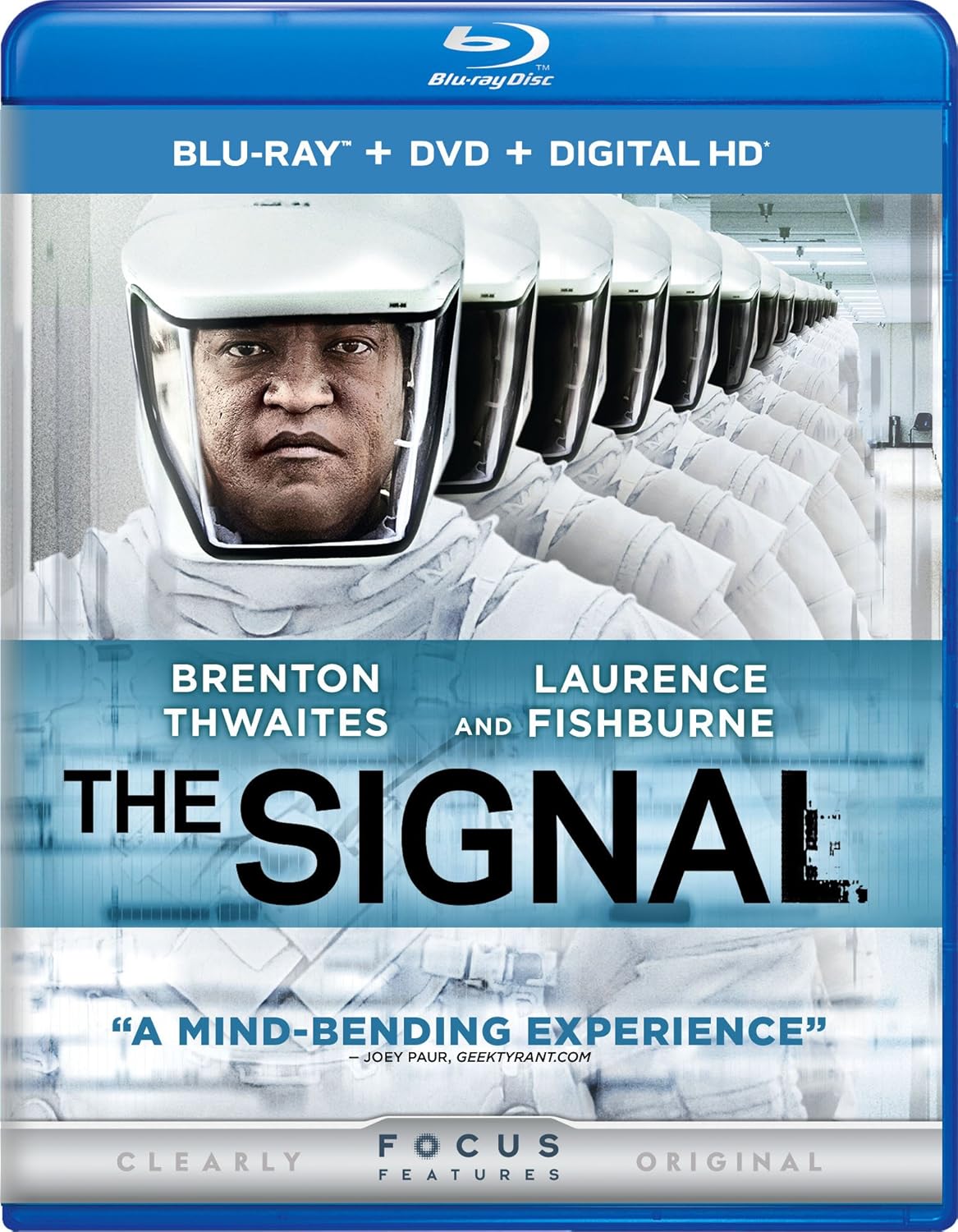
Sometimes, all it takes is a good image to get me interested in a film.  A while back I saw the BluRay release of The Signal (2014) and the static image of actor Laurence Fishborne in a hazmat suit was enough to get me curious to see the film itself…

I checked up information on the film and its plot sounded interesting as well.  I put it on my Netflix cue but wound up having the film pop up on a premium cable channel and recorded it.

About two weeks ago I saw it.

Now, its unusual to take this long to review any movie, but so disappointing was this film that I essentially tried to scrub it from my mind.  For those who only care what I think about the film, I hated it.  Don’t bother.  Not recommended.

Now let me pull a 180 and say: This film could have been amazing.

It starts with a trio of nerdy yet attractive young friends on a road trip across the United States.  The trio consists of Nic (Brenton Thwaites), his girlfriend Haley (Olivia Cooke), and his best friend Jonah (Beau Knapp).  Nic has a condition (we’re never told what exactly) which is slowly robbing him of the ability to walk.  Nic uses crutches and, as the film unfolds, we find he’s in a very dark place indeed.  Despite his youth, he knows his condition will only worsen and that what’s left of his life, for all intents and purposes, is very limited.

The friends are making this cross country trip for the sake of Haley.  She is relocating from the east coast and MIT (where the trio studies) to the west coast of the United States.  She will be there at least a year while Nic and Jonah return to the east coast.  While she very much loves Nic, she worries this move mark the end of their relationship.  Nic, on the other hand, looks at Haley’s move as a way for her to be freed of him as, again, he feels there is not much of a future remaining with him.

As they travel, the viewer also discover that Nic and Jonah are tracking a strange signal on the internet.  Before their trip someone had broken into the MIT mainframes and destroyed the information on them, something that was blamed on the trio, and they want to discover who this person is and expose them.  As they near Nevada, they get a new signal from this individual, who calls himself Nomad, and discover that the source of the signal is only a hundred miles from their current location.

Naturally, they decide to investigate and on an eerie night they find a run down shack in the middle of the desert.  This is where the signal emanates from.  They un-wisely decide to investigate and all hell breaks loose.

Up until this point, I absolutely loved this movie.  The trio of friends were easy to root for and all three actors delivered believable, sympathetic characterizations.  I was so into the film.

Unfortunately, one can’t grade a film by its parts.

After all hell breaks loose in and out of the shack, Nic awakens in a bed in what appears to be a hospital.  He’s wheeled out and questioned by Damon (Laurence Fishborne, who spends almost the entire film in that hazmat suit) about what happened to him.  The questions are mysterious, silly, and sometimes more profound.  Nic wants to know what happened to his friends and Damon is unwilling to give answers.

Eventually Nic spots Haley in a bed in one of the hospital rooms.  According to Damon, she’s in a coma.  What has become of Jonah is a mystery, at least for now.  Later still Nic discovers he’s been changed (I won’t reveal much more) and he desperately tries to escape his captors with Haley in tow.

The film moves one, becoming something of a chase film while keeping its central mysteries, all of which are revealed by the end and all of which are so damn stupid and obvious (yet nonsensical) that they made me seriously consider throwing heavy objects at my TV screen.

What a disappointment!

Again, the acting is good.  The opening minutes of the film are excellent.  Even some of the stuff involving the eerie hospital are quite good as well.  And for a fairly low budget feature, The Signal has some truly great effects (especially with regard to Nic’s “changes”).

But good-god-almighty what a terrible, terrible last act.  I can’t help but think the story was meant to be longer.  Perhaps instead of a movie, this should have been a mini-series.  Certainly the film’s end was very open and inconclusive, as if it was meant to be the first part of a larger work.

But it’s not one I care to follow, at least based on what I saw here.

Again, what an incredible disappointment.

Below is the trailer.  The trailer, IMHO, is amazing.  Far better than the film its selling you.

Why Superheroes Don’t Kill…

An interesting article by Jacob Brogan for Slate Magazine (you can read it here) briefly goes into the history of violence in comic books and why it is that those comic book Superheroes often have a code against killing.

Specifically he mentions one of the more notorious Batman stories of the past, “The Giants of Hugo Strange” which appeared nearly 75 years ago in Batman #1.

He notes that the grim goings on in the story (Batman has no qualms whatsoever in killing Hugo Strange’s oddball monsters) were received with concerned notes from parents and that the editors behind the scenes of the book ordered writer/co-creator Bill Finger to ease up on the violence following that story.

What is fascinating to me is how this may well have changed -for the better- the whole idea of superheroes, something Mr. Brogan goes into as well.  Even as a very young comic book reader I always admired the fact that heroes fought for good against at times very vicious villains but never descended to their level.

The Joker could and did kill, but Batman would never take him out.  Arrest him, imprison him, even rough him up, but never kill.

So too it was with Superman, though in his very, very early stories he also engaged in some roughhousing and possible murder as well.

So ingrained was the idea that heroes didn’t kill that one of the most startling things I experienced very early on as a child was the very first episode of the Six Million Dollar Man TV series (as opposed to the films released just before) entitled Population Zero.

In that episode, which owed a great deal of (ahem) credit to the book and movie The Andromeda Strain, an entire small rural town appears to have been killed off.  Steve Austin, the Bionic Man, is sent to investigate and he dons a space suit and walks into the town.  Everyone appears to have died simultaneously, their bodies littered all over the place.  But then, they awaken, seemingly all normal.

It turns out a master villain has knocked them all out with a sound wave weapon, one that can be calibrated, like the Star Trek phasers, to kill.

As the episode goes on, Steve Austin is captured and the evil scientist, it turns out, is well aware of the bionic project.  His sound wave project was declined funding by the government in favor of the bionic project.  He is delighted in having captured Steve Austin and imprisons him in a large meat freezer, noting that his bionic parts will freeze and he’ll die there while the villain uses his weapon to kill those who are pursuing him.

Steve Austin gets away, and in one of the most exciting climaxes of any TV show I had seen up to that point, rips a metal post from the ground and hurls it at the bad guy’s van.  It hits the van and the whole thing, including all the villains, blows up.  All the villains die in the explosion.

To say the least, I was shocked by this ending.

Steve Austin had killed instead of apprehended the bad guys!  He knew they were using power from the power lines around the area to fuel their device.  He could have taken them out and rendered their weapon useless.  Instead, he ends the threat there.

Completely.

It seemed the late 60’s/early 70’s were a time when the idea of what made a hero a hero was being tested.  You had Clint Eastwood in the Spaghetti Westerns and, afterwards, as Dirty Harry.  These roles provided a new template of what made a “hero”.  In this case, especially concerning Dirty Harry, our hero pushed the limits in decidedly shocking (at the time) ways.  So too in comic books you had villains who were more vicious and, as the decade of the 70’s moved on, heroes that would kill (Wolverine being a prime example).

In the 1980’s movies took several steps forward and suddenly you had heroes that killed villains by the scores.  Included in this mix were characters like Rambo.

Today, the state of the hero is in transition.  In Batman Begins, a film I happened to like quite a bit, I was more than a little irritated by the ultimate resolution between Batman and Ra’s Al Gul.  When Batman has Gul helpless in the train at the end of the film, he SHOULD have taken him from the train before it crashed and jailed him, instead of using the silly “I don’t kill, I just choose to not save you” idiocity.  By choosing to do nothing, he has very much made a choice and Gul dies in the wreck, a victim of Batman’s chosen inaction.

In the recent Superman and first Avengers film we deal with the destructive effects of a fight between gods yet both films try to sanitize the ultimate results of these destructive fights vis a vis the civilians caught in between.  While the Man of Steel film was rightly called out for showing destruction that should have resulted in scores of casualties, fewer fans called out essentially the same thing shown in Avengers.

The point is that the concept of the superhero is an evolving one.  The first comic book superheroes were influenced by Doc Savage and The Shadow, two of the greatest pulp creations.  These characters, especially The Shadow, who were not at all adverse to killing off their current villain problem.  Superheroes underwent a drastic change to where they did not kill and were always on the side of truth and justice, yet that changed as mentioned above.

Where do we go from here?

We’ll have to wait and see.

And so it begins…

I believe this is the first full review of the soon to be released Avengers: Age of Ultron movie:

http://www.cnn.com/2015/04/21/entertainment/avengers-age-of-ultron-review-feat/index.html

I have little doubt that the film will do terrific box office but I wonder if the film will be as flawed, plotwise, as the first film was.  Don’t get me wrong, I did enjoy the film for the most part but its one of those features that the more you think about it, the less sense the story makes.  In a curious way, it reminds me of Star Trek: Into Darkness.  When I saw each film I was entertained, but afterwards, sometimes days and weeks afterwards, I found myself thinking about things in the film and shaking my head.

I have both the original Avengers and Star Trek: Into Darkness on BluRay yet haven’t revisited them.  Wonder what I’d feel about either if I were to give them another shot?

Regardless, I’ll probably catch Age of Ultron in theaters.  If nothing else, I really like the cast assembled (ahem) for the feature.  Especially brilliant to get James Spader to do the voice of Ultron.  If he hadn’t made it as an actor, he’d have quite the career for voicing characters, especially evil characters!

QUICK UPDATE: I should have checked rottentomatoes.com before posting this.  Looks like there are several reviews out there…

http://www.rottentomatoes.com/m/avengers_age_of_ultron/

So far, the film is performing quite well.  It has a 84% positive rating among critics.

A Missed Opportunity…?

So over the past week we had the release of two highly anticipated theatrical trailers.  The one for the new Star Wars film, with its Harrison Ford coda, was met with euphoria.  The one for Batman vs Superman, presented below, was met with a more muted reaction…

There are those who felt the more muted reaction was a result of any number of possibilities.  For one, a bootleg version of this trailer was released to youtube a couple of days before Warner’s “official” trailer release and the company was therefore forced to release their HD version a day or two before the announced they would.  Others have bemoaned the movie’s “dark” tone, stating that while it fits in well with the character of Batman, it doesn’t fit with the more optimistic and bright Superman.

My feeling is that whatever muted reaction came as a result of the trailer it was due to the fact that Warner Brothers presented for the most part stuff we had seen before and missed a very big opportunity to give us something new.

The fact is that what was presented in this trailer doesn’t add all that much to what was already displayed (to much cheer!) at last year’s San Diego Comicon.  Sure, we saw a little more of Batman in his suit and we saw a brooding Bruce Wayne (Ben Affleck), but the “punchline” of the trailer remained the same as what was shown to great rapture at the Comicon, and that was the armored Batman confronting Superman.  Normally, seeing those images in HD should have been enough.  They are damn powerful.

But we’re living in the era of cell phone cameras and Youtube and those powerful Comicon scenes, which were never meant to appear outside the Comicon, did so in grainy form on Youtube, much like the leaked trailer, for everyone to see.  Sure, the images weren’t all that clear, but they were clear enough to give you an idea of what was coming.

So when this new, official trailer appeared, I personally felt a little disappointment that we didn’t see much that was new this time around.  This trailer, like the one in Comicon, featured the almost identical armored Batman confronting Superman punchline.

The frustrating thing is that the folks behind the scenes have other things –new things- they could have given us in the trailer’s climax.  Something I’m personally dying to see.

Wonder Woman.

That was the trailer’s missed opportunity.  Present everything as before, but at the very end, after we see Batman and Superman square off, give audiences at least a little taste, a hint if nothing more, of the third of the “big three” characters.

Had they shown Wonder Woman in full costume, holding her lasso or standing over a bunch of defeated badguys or getting into her airplane -even if it is something that will not make it to the film itself- I guarantee you that would have turned those frowns upside down.

As they say, hindsight is 20/20.

Hooper (1978) a (seriously) belated review

As mentioned before, I picked up a couple of Burt Reynolds starring films that hadn’t been released to BluRay until now.  Though copies of these films could be found before this release, word was these presentations had very inferior quality video and sound.  Thus I was hoping the BluRay release of both 1978’s Hooper and 1981’s Sharkey’s Machine would prove to be worth getting, if only to see each films presented closer to its original theatrical clarity.

Well, I haven’t gotten to Sharkey’s Machine yet but I did give Hooper a whirl and found both picture and sound very strong.  So if you’re like me and were holding out on buying a copy of this film until it received a proper presentation, rest easy.  The Hooper BluRay is very much worth getting.

As for the movie itself, this is the first time I’ve seen Hooper start to end since it was originally released to cinema way back in 1978.

My feelings for the film were decidedly mixed.  Like many young fans of cinema back then, Burt Reynolds was a movie GOD.  Just the year before he starred in probably his biggest box office hit, Smokey and the Bandit, and any follow up feature that involved vehicular mayhem was something I was eager to see.

Hooper would come out the next year and was directed by his Smokey and the Bandit director, former stuntman Hal Needham, so I came in hoping to see another comedy/action film very much along the same lines.

I recall, however, walking out of Hooper disappointed.  Unlike Smokey and the Bandit, this was no light-hearted humorous affair.  The film felt too serious and the stunts, remarkably, didn’t thrill me as much as they had with Smokey.

And yet, so much of the film remained recorded in my head.  Why would that be?  I wasn’t particularly crazy about the film the first, and only, time I saw it yet why did it linger in my mind some (gasp) 37 years later?

I had to check it out and did so.

And found the film was much better experience this time around.

The simple fact is this: Hooper aspired to be an “adult” film, even while it had a few elements that didn’t quite gel in that respect.  It took your basic, by now cliched boxer storyline and laid it over the world of stuntwork.

Burt Reynolds is Hooper, a high in demand, devil-may-care stuntman who is currently working on a big budget film directed by an odious “high art” type (Robert Klien doing, it has been rumored, an impression of director Peter Bogdanovich).  Despite his lighthearted attitude, audiences learn from the very first scenes in the film that Hooper’s body is littered with very painful looking scar tissue.  After Hooper performs his initial stunt, a motorcycle crash, we further learn that he’s in considerable pain and the wear and tear of this type of work endangers his health.

His right hand man and best friend Cully (delightfully played by James Best), gives him pain killers following the stunt but begs Hooper to go to a Doctor and get himself checked out.  Hooper declines and, almost simultaneously, hears about a new, young stud entering the stunt field who has set his eyes on being a stuntman as great as Hooper.

There is a certain irony to this situation as Hooper’s girlfriend is Gwen (Sally Field, looking absolutely beautiful) and her father Jocko (Brian Keith) was himself a legendary stuntman…until Hooper took his place.  (A bit of trivia: In real life Sally Field’s step-father was Jock Mahoney, a famous stuntman who also had acting credits.  “Jocko” was inspired by Jock Mahoney and Sally Field, in real life dating Burt Reynolds at the time, essentially got to play a version of herself!).

As the movie progresses, Hooper comes to know his young competition, a hungry and clever stuntman named Ski (Jan Michael Vincent).  To the movie’s credit, he’s never presented as a nasty would be rival or young punk.  He is as I stated: A clever yet hungry young man who wants to make it in the stunt field, though he doesn’t realize that by doing so he will eventually push Hooper out, just as Hooper pushed Jocko out.

There’s plenty of stuntwork to see within the film, including high wire falls, overturned cars, explosions, fires, and, in the movie’s climax, a long car jump.

Sadly, like Smokey and the Bandit, the passage of time has made most of these once thrilling stunts looks rather ordinary.

On the plus side, the film moves well, at times surprising you with some of the story choices and more adult themes.  The acting is also almost uniformly good and at times clever and amusing.  Adam West, the “star” of the film Hooper is working on, plays a superstar actor named…Adam West!

But, as mentioned before, there are bumps in the road (ouch!) as well.  The movie at times shows a childish, almost silly attitude (the two encounters Hooper has with police look like they belong in another film.  In “real life” they wouldn’t end quite so nicely).  Further, I’ve always been bothered by the grand finale stunt(s).  Why exactly did they have to capture it in one take?  Given the piecemeal way films are made, doing this in one take made little sense.

Still, watching Hooper again after all these years was a fun experience.  One can see why Burt Reynolds was such a superstar back then, even as some of the movie’s excesses and silliness pointed to where his career would eventually go wrong.

Superhero costumes in film…

…could it be the porn parodies do a better job of translating superhero costumes to the screen?

See for yourself:

http://moviepilot.com/posts/2015/04/08/nsfw-parody-costumes-that-are-better-than-the-movies-2843418

The only problem with the article is that they assume anyone who reads it already knows what the comic book characters look like on the page and therefore can judge which version, porn parody or movie version, more adheres to the original comic book look of said character.

So, for those not so familiar with the comic book versions, these two of six of the examples stuck me as where the porn parody versions more closely adhered to the original comic book looks:

First up, Scarlet Witch, as presented in the comic books:

Scarlet Witch in porn (left) versus the way she’s presented (right) in the upcoming Avengers movie…

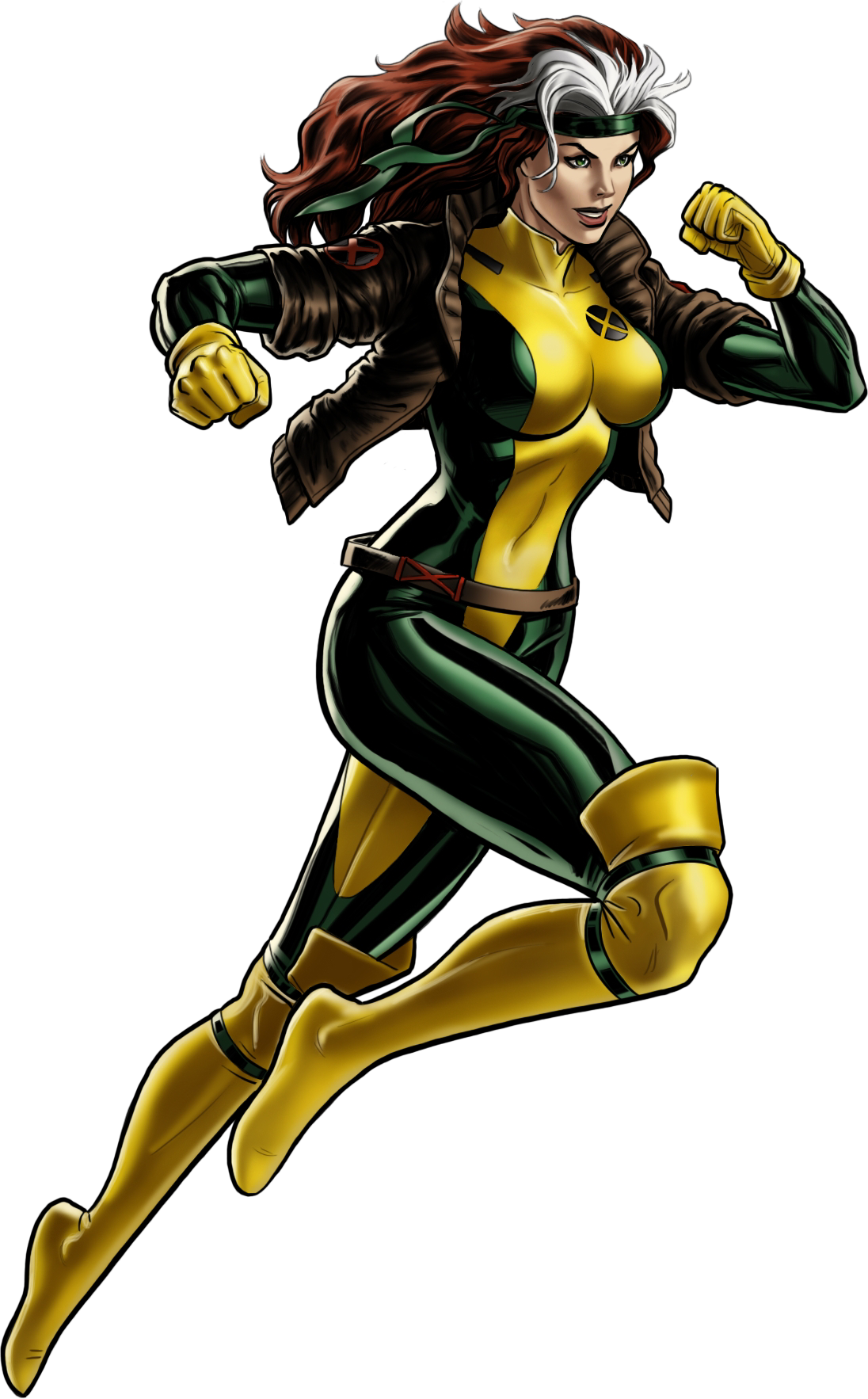
Rogue, as presented in the comic books…

And in porno (left) versus in the X-Men movies (right)…

As I said before, these two, to my eyes, were the clearest examples of the six presented showing that the porn parody versions honored the original “look” of the characters more than the “legitimate” film versions!