Category Archives: Books/Literature

Game of Thrones…books vs. HBO show

So the big news a couple of days ago for Game of Thrones (novel and/or HBO show) fans was the admission by the show’s front runners that the HBO series will more than likely end well before the final two George R. R. Martin books are released.  Therefore, naturally, the TV show will become a giant SPOILER for what’s to come in those still unpublished and unfinished novels.

http://io9.com/game-of-thrones-finally-admits-the-show-will-spoil-the-1693101904

I have yet to see a full episode of Game of Thrones.  For that matter, I haven’t watched but two or so episodes of The Walking Dead.  These two shows are arguably the most popular TV series out there today but I’m not following either of them.

It’s not snobbishness on my part.  I followed The Walking Dead comic books quite religiously and enjoyed the hell out of the series…that is, until the resolution of the prison storyline.  It was at that point I felt author Robert Kirkman was going for shock more than powerful storytelling and was so turned off by that resolution that I left the book.  When the TV show subsequently came around, I didn’t want to relive the storylines I’d already read and get to that awful (IMHO) point again.  I know the show has deviated from the comic book series, but I just couldn’t follow it because of that bad taste left behind from the prison resolution.

As for Game of Thrones, I was interested in seeing the series but because I didn’t have HBO couldn’t see it on its first run.  I was planning to catch it once that first season was released on BluRay but, unfortunately, so many spoilers started flying on the internet that it was tough to avoid accidentally (much less on purpose!) hearing about things going on in that show.  So much was spoiled that I gave up on seeing the show even before I had the chance to “catch up” on it.

Having said all this, I feel sorry for author George R. R. Martin.  Not for his success and certainly not for his fame and the money I’m sure he’s making for this incredibly successful TV/book series.

What I feel bad about is that the series has proven so successful and his writing of the last two novels of the series has slowed so much that he’s put in this untenable position of releasing his last novels with (perhaps) many of the final surprises/resolutions already well known to the public at large.

As an author, though one with a far smaller bank account that Mr. Martin’s, I have faced the prospect of writing books that have taken me a frustratingly long time to finish.  My fifth Corrosive Knights novel, Ghost of the Argus, took two full years for me to finish off.  Going into that book, I knew it would take more effort to write it than the previous four books in the series.  It was the novel that tied all the others together, and I wanted it to do so in a logical, comfortable way…a tough thing to do considering the books have a history that stretches out thousands of years.

The amount of work experienced producing this novel was easily far more than any of the previous ones.  It got to the point where I woke up thinking about Ghost of the Argus, had breakfast with the novel on my mind, did a few hours of work on the novel, headed off to my other job with the novel on my mind (and the gears in my head whirling on what I had just written), got back home with the book on my mind (and if I had the energy, spent some more time working on it then), and finally went to sleep thinking about what I’d do the next day with it.

Author Lester Dent, best known for his many, many Doc Savage pulp novels, famously had a nervous breakdown during the time he was working so hard on that series.  The Doc Savage pulp magazine was published monthly from 1933 to 1949 and of the 181 stories written, Mr. Dent was personally responsible for approximately 161 of them.  During Mr. Dent’s breakdown, he supposedly was found “talking” to his fictional Doc Savage characters.

While I could not keep up the pace Mr. Dent had to endure, I can sympathize with that feeling of being so overwhelmed by your creations that they threaten to take up your entire life.

The Game of Thrones universe that Mr. Martin has created is an incredibly complex and rich one and I know it must be very difficult to spend each day writing this work while keeping all your characters and situations in their proper context.  I’m certain that if Mr. Martin could wave a magic wand and have the final books be ready for release, he’d take that opportunity is a heartbeat.  It is incredibly difficult to write books and be hard enough on yourself as an author to hold back their release until you feel that particular work is “ready” to be released.

If I had been less demanding of myself and my works, I would have released Ghost of the Argus after a year’s time, like my other works.  But whatever I would have released wouldn’t have been anywhere near as good as I wanted it to be.  Like Mr. Martin, I have an endgame for the series and have already written a (very) rough draft for the final novel in the series, though I’m not certain if it will be book 8 or if I’ll want to release another couple of books before finally wrapping the series up (I’m currently on book 6 and have book 7 roughly plotted).

In Mr. Martin’s case, while I’m sure he has a relatively detailed endgame, I suspect he’s not all that different from me in the sense that there may be things he wants to explore, things that even the people behind the TV series are unaware of.  For writing, in my experience, is often an organic thing.  You plant your seeds and sometimes they grow this way and that, surprising and delighting you with their twists and turns.

Mr. Martin, I’m sure, is under tremendous pressure to try to release his books before the TV show is done.  He probably will not hit that mark and its too bad his success has put him in such a high pressure situation.
Two-Page Hardy Boys Plot Outline…

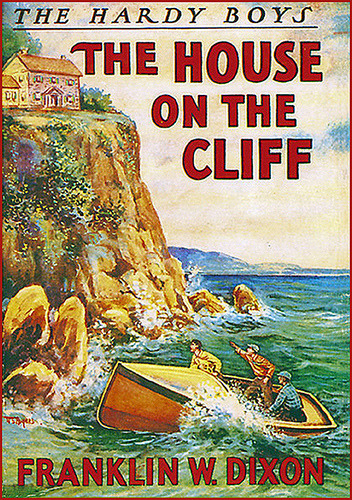
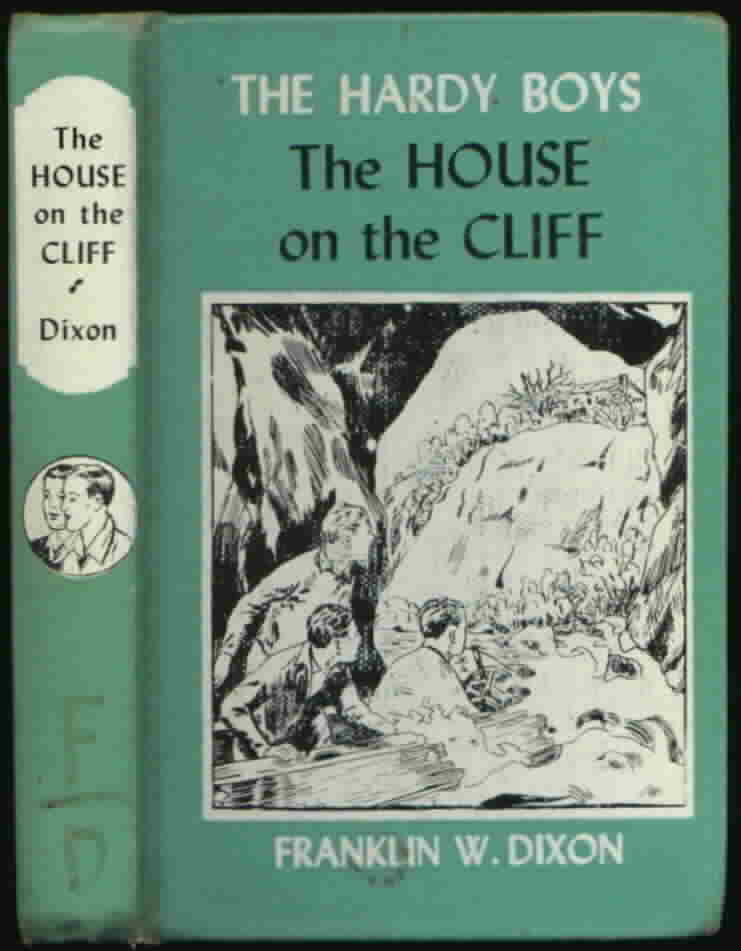
Fascinating, though short, article regarding the two page plot outline author Edward Stratemeyer directed writer Leslie McFarlane to follow in crafting The House on the Cliff, the second Hardy Boys book which was originally released in 1927:

http://www.slate.com/blogs/the-vault/2015/03/13/history-of-the-stratemeyer-syndicate-hardy-boys-plot-outline.html

I’ve probably mentioned it before, but The Hardy Boys were among my first reading passions.  Over perhaps five or so years I found and read just about every book in their series available at the time (we’re talking up to the late 1970’s) before going into Nancy Drew and, to a far lesser extent, The Bobbsey Twins.  I can’t even guess as to how many books of those three series I read, though they must have totaled close to 100 before I finally outgrew them and explored other works.

Still, I distinctly recall the thrill of realizing one could string together a series of words that eventually resulted -magically, it seemed!- in a singular work of entertainment.  There is little doubt these quickly written works influenced me a great deal, leading me in their own way to become an author as well.

Anyway, as I looked up the book, I found images of the various cover designs for The House on the Cliff.  It is interesting to see how the cover design evolved over time while retaining the same general concept.


The above are three very early versions, while the one below is the one I’m most familiar with.  However, this is a more recent version, too, as the one I knew didn’t have “The Hardy Boys and the flashlight and #2 to indicate where it fell in the series.

Finally, a more recent “update”:

The bizarre, unsolved mystery of “My Immortal”

Until I read this article I never heard “My Immortal”, which many consider one of the very worst examples of “fan fiction”.  To say the least, I’m intrigued.  You might be too:

http://www.slate.com/blogs/browbeat/2015/03/13/-my-immortal-who-is-responsible-for-the-world-s-worst-fanfiction.html

“My Immortal” is a nearly 23,000 word long story featuring the cast of Harry Potter in a weird, very weird bit of fan fiction which features a goth vampire central character, sexual escapades, vulgarities, misspellings of character names, etc. etc.

There are those who feel this work has to be a knowing parody of fan fiction but…I’m not so sure.  Still, the article is fascinating, especially given the fact that the author -or authors!- remain a mystery to this day.

Fascinating stuff!

It’s been a while…

From Cracked.com, 4 Awful Works by Famous Geniuses Everyone Pretends to Like:

http://www.cracked.com/blog/4-terrible-ideas-from-historys-greatest-geniuses/

I really have to agree with the second item, John Lennon’s Revolution #9.  I’m as big a fanatic of The Beatles as can be, but that “song”…

In fact, when I was transferring my CDs to my hard drive, I was tempted to delete the song but wound up keeping it only because of my desire to keep the album complete.  However, and to the best of my memory, I’ve only listened to Revolution #9 once from start to end and never had a desire to revisit it.

Still, this list, while amusing, points out the fact that even the best of the best creators have their “off day” and, in some cases, one can say that the “bad” work is in the eye/ear of the beholder.

Still, an interesting if too brief read.

For the masochistic out there:

In praise of…artistic theft?!

Interesting, to say the least, article by Alex McCown regarding the above:

http://www.avclub.com/article/praise-artistic-theft-214962

I’ve grappled long and hard with the line which separates artistic “inspiration” from outright “theft.”

In the above article, poet T. S. Eliot is quoted in what I believe is one of the great descriptions of artistic works, and what distinguishes a good artist from a bad one regarding their “inspiration”:

One of the surest tests [of the superiority or inferiority of a poet] is the way in which a poet borrows. Immature poets imitate; mature poets steal; bad poets deface what they take, and good poets make it into something better, or at least something different. The good poet welds his theft into a whole of feeling which is unique, utterly different than that from which it is torn; the bad poet throws it into something which has no cohesion. A good poet will usually borrow from authors remote in time, or alien in language, or diverse in interest.

Let me repeat the quote’s most pertinent lines: “A good poet welds his theft into a whole of feeling which is unique, utterly different than that from which it is torn.”

The term “poet” as mentioned above can easily be replaced with artist, film maker, script writer, novelist, musician, etc.

When Star Wars came out in 1977, and as I’ve mentioned many times before, I wasn’t all that impressed.  I believe this was at least partly due to the fact that many of the tropes within the film were recognizable to me.  Even on that first viewing I detected elements from, among others, Flash Gordon, Edgar Rice Burroughs, the cliffhanger serials of the 1940’s, and Jack Kirby comic books.  Yes, I was a nerdy kid, one who had immersed himself in these various works.  Later on, with the advent of the home video market, I came to realize Star Wars also lifted ideas from films by Akira Kurosawa, in particular The Hidden Fortress.

Having said all that, and while acknowledging (once again!) that Star Wars never did much for me, I will now come to the movie’s defense and say that what Lucas did was take elements of many works and, as Eliot notes, “weld(ed) it into something better, or at least something different.”

The same, to my mind, could not be said for the immensely popular Guardians of the Galaxy, a movie that, unlike Star Wars, I wound up loathing.  For Star Wars, the inspirations were from (no pun intended) long ago and general audiences were not as familiar with the sources (A good poet will usually borrow from authors remote in time, or alien in language, or diverse in interest).  Add to that the fact that while Mr. Lucas appropriated elements here and there, the story presented within the movie, of an evil Empire with a fearsome planet-sized weapon threatening innocents, was relatively original.

So for me Star Wars, flaws and all in my eyes, was a film that nonetheless did well with its inspirations.  Guardians of the Galaxy, however, stepped over the line of inspiration and into, in my opinion, outright creative theft.

The bad poet throws it into something which has no cohesion.

This was exactly my feelings regarding Guardians of the Galaxy.  They took the plot of Star Wars, changed only a few elements, and essentially re-created that film but with far less cohesion (again, in my humble opinion and, obviously, I was in a VERY big minority).

So, what can we conclude with all this?

That it is all about opinion.

For me, personally, I recognize the influences of other works on my novels.  I will come right out and say that they were inspired by many things.  But I will then go on to say that I try very hard to take those elements that inspire me and make something new and interesting with them.  Sure, the end result may not be completely original -you’d have to look far and wide to find any work of art that is- but I can at least look myself in the mirror and say that I’m trying to create something that may use familiar (or not so familiar) elements and make something relatively “new” with them.

At least I hope so!

Tintin Cover Sells For Near Record 2.8 Million…

I’ve made my love for the Tintin graphic novels by Herge known before.  I guess I’m not the only one.

Someone just bought the original artwork for the cover of the 1942 Tintin graphic novel The Shooting Star for a whopping 2.8 million…

http://robot6.comicbookresources.com/2015/02/tintin-cover-sells-for-near-record-2-8-million-at-auction/

This is the actual printed/colored cover as seen in the graphic novels:

tintin-shooting star-color

And here’s the original artwork that was sold:

tintin-shoooting star-original

Not much to add here, just noting how popular the character and the original works of author/artist Herge remain.

Ancient Scrolls Burned by Mt. Vesuvius…

…deciphered by new X-Ray technique?  Read all about it:

http://www.nytimes.com/2015/01/21/science/more-progress-made-toward-learning-contents-of-herculaneum-scrolls.html

Basically we have several scrolls that were found burned in the town of Herculaneum, a town close to Pompeii, which suffered the same fate during the eruption of Mt. Vesuvius back in 79 A.D.

Until now there was no way to “pull apart” the scrolls to try to read the material on them as doing so would destroy them.  Now, however, thanks to a new X-Ray technique, there is a way to “see” the indentations of the writing on the scrolls without actually doing anything to them.

The exciting part of this?  David Sider, a professor of classics at New York University put it succinctly within the article:

“For a scholar, it would be wonderful to have a manuscript of Virgil written in his lifetime, because what we have are medieval manuscripts which have suffered many changes at the hands of copyists.”

Fascinating stuff!

5 Reasons Great Directors Eventually Make a Bad Movie…

…this list is by Daniel Dockery and can be found on Cracked.com or by clicking the below link:

http://www.cracked.com/blog/5-reasons-great-directors-eventually-make-bad-movie/

I find such ruminations fascinating because it seems almost everyone that has been very successful in creating exceptional work(s) of art, be they paintings, music, literature, or movies, eventually releases something that is, for lack of a better word, sour.

Director Alfred Hitchcock had perhaps one of the all time greatest careers in cinema, releasing films that were undeniably “Hitchcokian”.  These films were noted for featuring great suspense and skullduggery along with some very, very funny black humor.  His first feature was made in 1922 and his last was released in 1976, making for a career that lasted a mind boggling 54 years.

Arguably, he “came into his own” and began releasing his distinctive brand of films in the early to mid 1930’s on, reaching his creative peak (again, in many people’s opinions) in the mid 1950’s through the early 1960’s.  During those years Mr. Hitchcock directed such movie landmarks as Rear Window (1954), Vertigo (1958), North By Northwest (1959), Psycho (1960), and The Birds (1963) (RIP Rod Taylor).  However, those weren’t the only films he released during that time.  Mr. Hitchcock was nothing if not proficient, but I suspect most people would site the films I list above as his “cream of the crop”.

But a very curious thing happened after The Birds: Whether it was age or disinterest or perhaps any of the other five reasons mentioned in the above link (one could argue a few might well apply) Mr. Hitchcock abruptly hit what amounted to a creative wall.  He would go on to make five more feature films after The Birds:  Marnie (1964), Torn Curtain (1966), Topaz (1969), Frenzy (1972) and Family Plot (1976).  While these films have their defenders, even the most dedicated Hitchcock fans offer few reasons to revisit either Torn Curtain or Topaz.  I’m equally certain even the strongest defenders of Mr. Hitchcock’s last decade plus of production, if cornered, have to admit none of the above listed films come close to the dizzying heights of his best works.

So what happened?  One is left to speculate.  When I was younger, I had this vision of a writer who sat before their typewriter (this was before the era of the computer) and daydreamed and then wrote whatever fancy hit him/her.

The reality is that writing, like most other artistic endeavors, is a job.  Their product is the result of work.  Often very, very hard work.

An author has to make a book that sells if s/he is to have a career in the field.  To do so, they have to please audiences as well as those who publish their work.  This entails a great deal of pressure.  For directors, I imagine, the pressure is multiplied.  To begin, you have to convince investors you have the talent and potential product that will offer these money people a good return on their investment.  Once you get the investment and production begins, these investors don’t simply disappear.  You can be certain they’re going to keep an close eye on what you’re up to and make sure you aren’t squandering their cash.

Add to that the fact that you’re dealing with a cast and crew, sometimes in the hundreds, who will have a myriad of different levels of interest in whatever you’re making.  Some may view the work as nothing more than a paying job while others may be just as invested as you are.  Then again, there’s the danger they’re too invested and have vastly different visions of how the work should be presented.  If your talent has a big enough “name”, they may demand changes that they feel will accentuate their work but which you, as a director, may feel harms the overall product.  And that’s not counting your garden variety clashes of personalities.

I don’t envy directors.  The fact that good, even great films have been produced in the past and will no doubt be made into the future shows that sometimes the stars align and a good work is made.  Sometimes, if you’re crafty and creative enough, several good films will be released under your name.

But there seems to inevitably come a time when things don’t work out as well as they should.  Hopefully, you’ll recover and learn from your experience and once again create something audiences feel matches your very best work.

Hopefully.

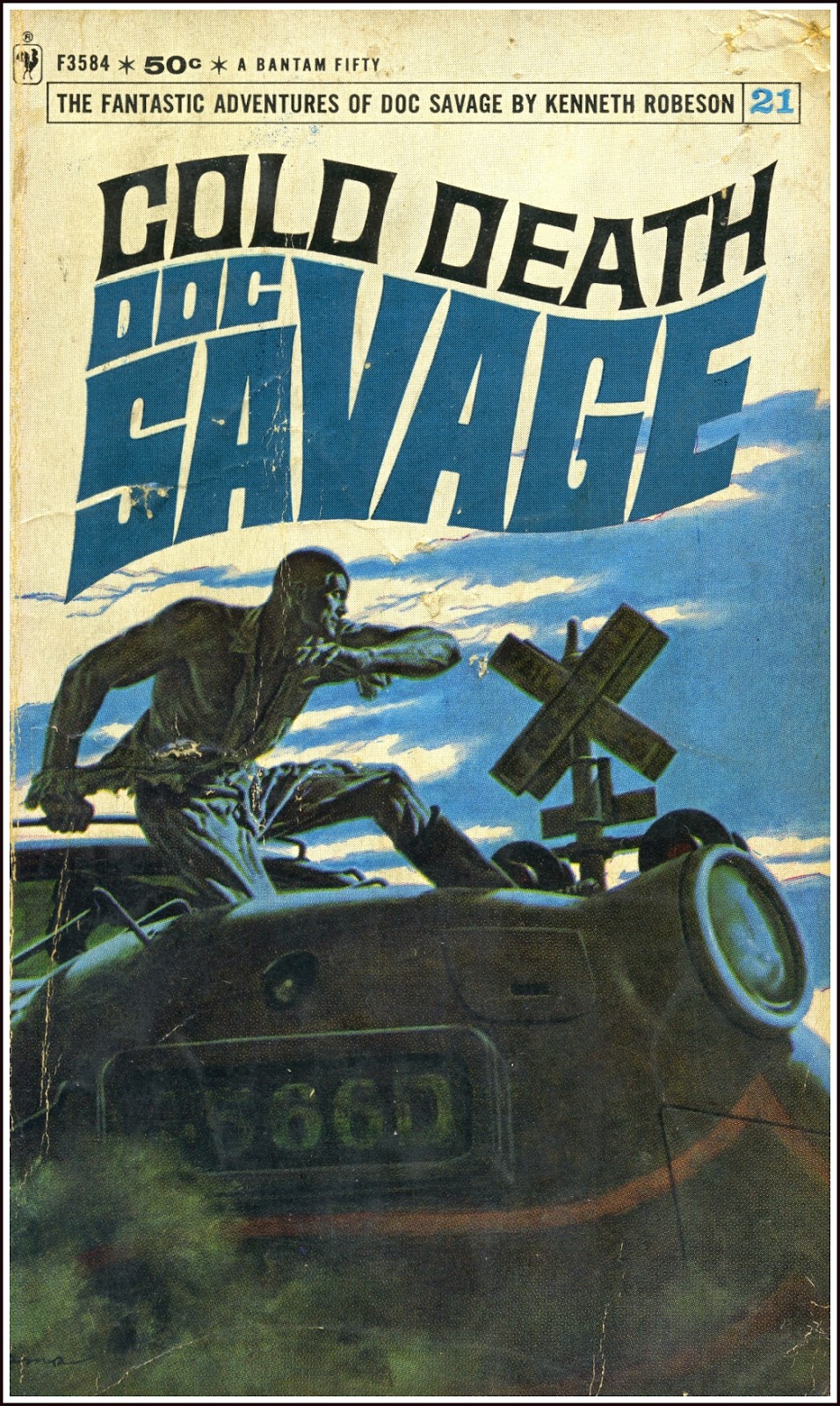
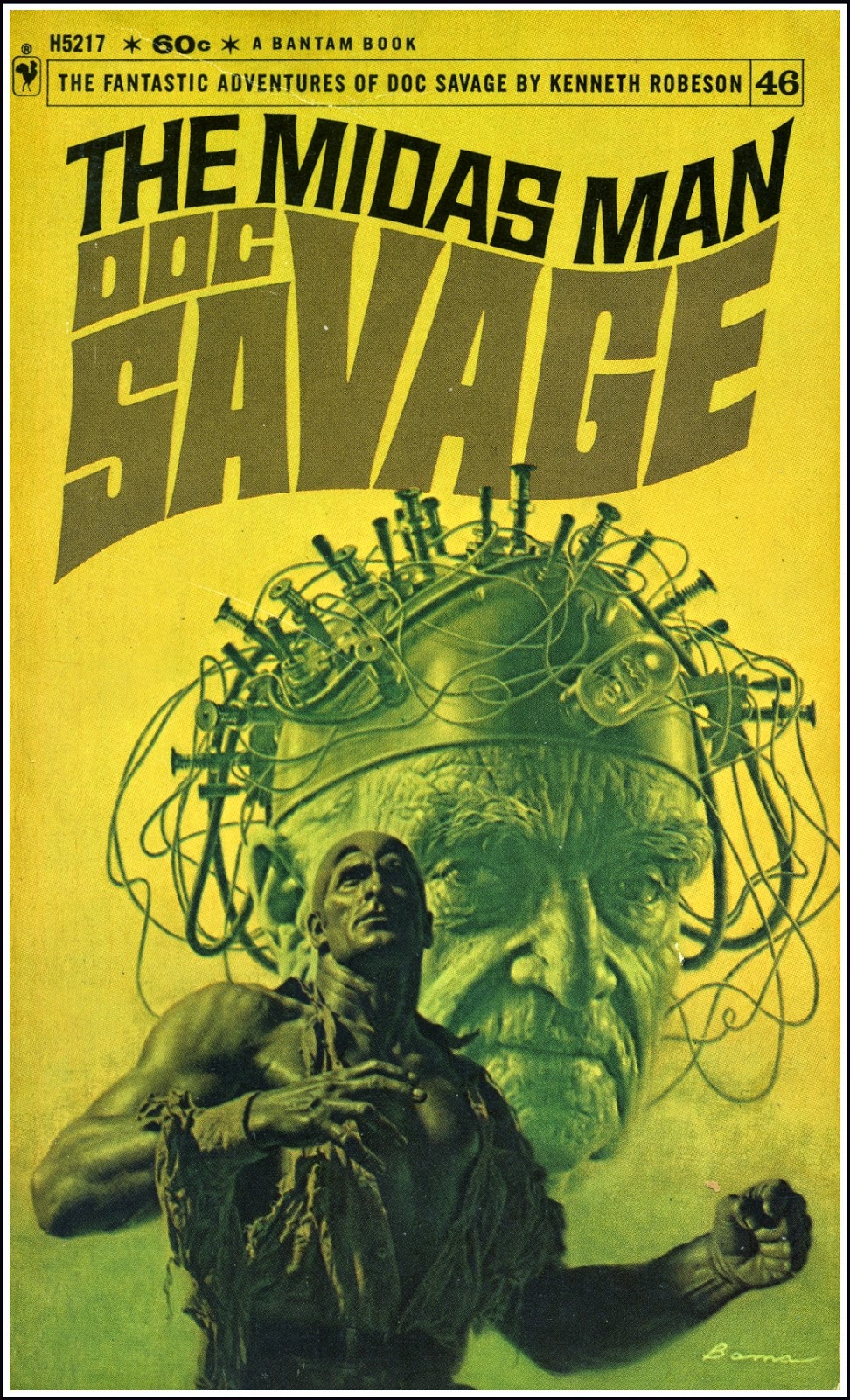
James Bama Doc Savage

If you’re like me and you absolutely love the James Bama Doc Savage book covers like I do, you’ll really appreciate this link as it provides the whole run of his excellent covers, covers which really made me interested in the character and the stories:

http://thegoldenagesite.blogspot.com/2014/12/james-bama-doc-savage.html

Of all the ones he did, my favorite is probably this one:

I just love the sense of adventure and mystery presented in the image.  My second favorite would probably be this one:

What Mr. Bama did so well was create this otherworldly looking main character (in the original pulps he looked more like a Buster Crabbe) and put him into a picture that beautifully hinted at the pulp adventure that awaited you in the book itself.  I don’t know what the original Doc Savage creators/writers (particularly main author Lester Dent, who passed away years before the first of these covers were to appear) might think of Mr. Bama’s reinterpretation of the character, but for me this is THE look of Doc Savage.

Check out the rest!

Long Lost Works of Literature…

Fascinating article by Paul Anthony Jones listing ten literary works that, more than likely, have been lost forever:

http://www.huffingtonpost.com/paul-anthony-jones/long-lost-works_b_6271482.html

For some of these works it is quite clear they are indeed lost for all times as we know the only copy(s) of them were destroyed…and we know who destroyed them and have a good idea as to why!

There are others, though, that one might have some hope of eventually finding, like Homer’s Margites and, perhaps, Shakespeare’s Cordenio.

There are also those that frustrate as they are likely lost for silly reasons, like the near complete early works of Ernest Hemingway which, unwisely, were all stored in a suitcase which was either lost or stolen from a train station back in 1922.

Where’s the cloud when you need it!?!