
Category Archives: TV

Atari: Game Over (2014) a (mildly) belated review

I consider myself a part of the first generation of home video gamer fans.  I had a Pong type video game system in the mid-70’s and by 1978 or so had an Atari system (later it would be renamed the Atari 2600 system to distinguish it from later systems).

If you lived and experienced this home video game revolution, you know how incredible it was to have an Atari 2600 system.  Back then, video games were a revolution in the entertainment medium and having an Atari in your home allowed you to continue having arcade type fun outside the arcade itself.  Looking at the system and, in particular, the Atari 2600’s crude graphics today may have modern audiences scratching their heads.  Today’s games are almost hyperreal.  How in the world could anyone like that crude stuff?

Trust me, we did.

As dominant as the Atari system was, it is bewildering that in the early to mid-1980’s the system was suddenly and abruptly gone and Atari, the company that was so much a part of my childhood, faded away into oblivion.

Which brings us to Atari: Game Over, the documentary that on its surface explores one of the great legends regarding the company’s most infamous video game release, E.T.: The Extra-Terrestrial, yet also looks back with nostalgia and sobriety at the rise and fall of the Atari Company.

The legend the documentary explores goes like this: The E. T.: The Extra-Terrestrial video game, released to coincide with the release of the famous Steven Spielberg film, proved to be such a disaster that its failure sunk Atari.  Because the company produced way too many copies of the game, it was ultimately forced to dump the massive unsold stock into a landfill.

Did this happen?  And if so, could the buried copies of the game be found and the legend confirmed?

Using this as a jumping off point, the documentary that follows explores the Atari company and the people behind it.  The man responsible for the E.T. game, Howard Warshaw, proves to be the most interesting person, at least to me, in this documentary.  He talks of coming to Atari in the early days and the success of his very first game, Yar’s Revenge.
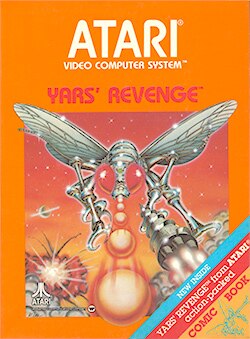
One gets the feeling he was something of a “golden boy” at the company during its good times (Yar’s Revenge was the best-sellingest video game Atari would ever release) and became the scapegoat when the E.T. game proved a failure.

In between we follow the people behind the search for the spot where the video games may have been dumped in a landfill in Alamogordo and go through the process of digging said site up (after making it through several levels of bureaucracy).

If there is one complaint I have about this documentary is that it is rather short and could have delved a little more into the life of Mr. Warshaw and perhaps a few others at Atari.

In spite of this, Atari: Game Over is a delightful documentary that explores a video game legend and, in its own way, proves to be a treasure hunt…though the treasure hunted, let’s face it, is trash.

Recommended, particularly if you were there during Atari’s golden years.

Anyone watching…?

Apparently, not enough.  A list of 2014/15 TV shows now officially cancelled:

http://www.cnn.com/2014/05/12/showbiz/gallery/canceled-tv-shows/index.html

Maybe its the long hours I work but of all the shows mentioned, I haven’t seen a full episode of any of them.

I caught maybe five minutes of Gracepoint (what little I saw didn’t really grab me) and maybe fifteen minutes of one episode of Selfie.

I found Selfie to be pretty good and, apparently, the critical reaction to it was kind but the numbers didn’t merit the series continuing.  That’s the way it goes sometimes.  You create something good but no one cares.  Sometimes studios just roll something out, expecting it to tank, and are surprised by how well it does.

Yesterday while driving around in my car I was listening to a 2013 interview Howard Stern had with comedian Jerry Sienfeld.  During the course of the interview Mr. Stern got into the success of the Sienfeld TV show and asked Mr. Sienfeld why it took so long for the studios to give him the opportunity to have a show.

Mr. Sienfeld was diplomatic, stating that many who work away from what we see on screen have no idea what will hit and what will miss, which makes their job a very tough one.

He noted that after Johnny Carson went off the air, he had dinner with him and Mr. Carson talked about the time when the Lawrence Welch Show was about to air and how everyone was pounding the tables in laughter about what a colossal failure that show would be.

The guy can’t even speak English!  They said.

Yet the show airs and, against all “insider” expectations, proves a tremendous success.  So successful it was, Howard Stern notes, that it effectively killed Sid Ceasar’s second go at TV, a show that also featured the writing of Mel Brooks!

Perhaps the most famous line regarding Hollywood and their creations was penned by screenwriter extraordinaire William Goldman:

Nobody knows anything.

How very true.

What Do People Love Today That May Not Hold Up In The Future…?

Fascinating question posed by the folks at i09.com (you can read the article here).

This being essentially an “open ended” question, the meat of the matter lies in the responses following the article itself, which posited that the insanely popular (at least at this point!) TV show The Walking Dead may not age all that well over time.

I found the very first response the most interesting: that the Marvel Cinematic Universe may not age all that well.

Let me go one better: It is often the most popularly watched/read/listened to items when they are originally released  that are in most danger of fading with time.  In part, this is due to oversaturation.  There will come a point, though probably not with the new Avengers film that’s about to be released, when the magic found in those films will suddenly be gone.

There was a time I watched The Simpsons religiously.  In fact, I thought it was the best comedy show on TV, period.  I watched the first five or so seasons, mostly with delight, but then something happened and from that point on I haven’t been willing to see an entire episode of the show at all.  Basically, I had my fill of The Simpsons and didn’t want or care to ever see it again.  And those early episodes that delighted me so?  I have them on DVD.  I have yet to re-watch any of them.

Will the same happen to the Marvel Universe movies?  Frankly, I think it is already happening to some degree.  Already a consensus is emerging on what the “good” Marvel Universe movies and what the “bad” ones are.  I, for one, didn’t find Iron Man 2 as bad as most people felt it was.  And yet, I don’t see myself seeing the film again.  One the other hand, I enjoyed both Thor films when I watched them, yet I don’t see myself revisiting either film in the future, either.

Another reason something very popular today may not be so popular tomorrow: Generational taste.  If there’s one thing I’ve come to realize over time it is that each generation has their own interests and sometimes they have little to no interest in what came before.  In part this could be due to changing attitudes. Perhaps it is also an issue of generational identity.

When I was a child, the novels of Harold Robbins were all the rage with adults.  His books usually featured sweeping generational stories loaded with (at the time) frank, graphic sexuality.  Perhaps it was nothing more than this sexuality (which may be considered tame by today’s standards) that brought the readers in.  Regardless, his books sold in the millions and a mind-boggling ten of them were made into movies and/or TV mini-series.

Yet by the 1980’s, it seemed to me that Mr. Robbins’ red-hot books were suddenly not as popular.  Mr. Robbins died in 1997.  By that time, I suspect very few remembered who he was.  Today, I doubt there are many younger readers out there who have any idea at all who Harold Robbins is.

So we return to the question at hand: What work that people love today will not hold up in the future?

As with everything, time will tell.

A sign of the times…

Perhaps one of the best known/watched TV shows today is HBO’s Game of Thrones.  This past weekend, as they are wont to do, HBO offered a “free” weekend of viewing for those who don’t have the cable station as a way to give them the premiere of this season’s Game of Thrones (it aired Sunday).  Of course, the free “taste” of the fifth season of this show is intended to get people to, hopefully, subscribe to HBO.

But even before that first episode aired came news that the first FIVE episodes of the fifth season had already leaked and were available to be downloaded at various pirate websites:

http://gizmodo.com/nearly-half-of-game-of-thrones-season-5-just-leaked-1697305966

As I said in the heading, this is unfortunately very much a sign of the times.  If you have anything that is popular and desirable, be it music, movies, books, and, yes, TV shows, chances are good you’ll find pirate copies of them available online.

And that’s too bad.

While shows like Game of Thrones no doubt earn their investment dollars many times over, the fact is that not all works of art and their creators/investors are as fortunate.  Piracy, even in small amounts, hurts the bottom line.  While there may be those who illegally download something and later on legally pay for the same product, there will always be some percentage of these people who get material illegally and for free and do not bother to pursue it any other way.

One of the great concerns I have today is that artistic creations have become dangerously devalued.  There are great and powerful industries out there that create wonderful machines that allow you to see and experience artistic works (smartphones, computers, tablets, etc.) and as consumers we’re willing to pay sometimes big money to have the latest of these items…yet the things the machines allow us to see/hear -from music to movies to books- are for the most part unprotected.

You have the latest iPhone or iPad or Samsung or HP computer, etc. etc. and with them you can go to assorted websites and illegally download a movie/music/book/etc. you want to see.  Sometimes, this movie/song/book hasn’t yet been formally released!

The end result, I fear, is that the ease with which people can get these items creates a sense the act of creating them didn’t involve much actual work.  I’ve noted before the weird (to me) idea that authors “shit out” their books in their free time while and during the rest of the hours in the day pursue a life of fun and leisure.  This concept has been exacerbated by TV shows such as Murder She Wrote and, more recently, Castle.

I fear this idea is permeating other creative fields.  Coming up with a song/album?  Come on, how hard can that be?  Drawing a 22 page comic book?  Shouldn’t take more than a day, right?  Writing a story?  Can’t take much more to create it than it does to read it.

Even worse, there are those who know creating such works takes time and effort and they just don’t care.

If I work somewhere -from a Wall Street office to a McDonalds- eight hours a day for two weeks, at the end of this time I expect to get a check for my work.  With artistic creations, you may do the very same time and work just as hard and for just as long…and your hard work can then be taken from you, posted online, and whatever monies you might have made are now subject to that loss.

I’m not saying anything anyone out there shouldn’t know already.

Piracy is, at least as of now, a sad reality of life.  Perhaps in time there will be a way to more securely protect your artistic works so that they don’t end up pirated online.

Or perhaps there will never be a way of doing this.

Regardless, the irony is that the people who will ultimately be hurt by this are the consumers.  The Beatles took years to practice their trade and be properly paid for their work until they were able to create some truly memorable songs and albums.

Somewhere out there might be a band that, with time, might have become just as good as them, but they make no money from their music because it simply doesn’t sell as much as it is pirated.  Unlike John, Paul, George, and Ringo, the members of this band eventually have to break apart…they simply cannot sustain themselves.

And we, the public, will never get to hear what this band might have made.

Or see what this director could have created.

Or this writer.

Or this artist.

Twin Peaks revival…without David Lynch!?

Before I get to the story, a brief statement: I’m a fan of director David Lynch and certainly appreciate his work and its influences (especially when it comes to Twin Peaks), but I’m not a fanatic of his works.

To me, his best all around film was Mulholland Drive (2001), and I believe part of the reason that film worked so well is because it felt as if Mr. Lynch took everything he knew and/or had worked on up to that moment and distilled the very best of it into that film (one very clever critic at the time of the film’s release stated that watching Mulholland Drive was the equivalent to buying one of those “Best of” albums from one of your favorite bands).

As for Twin Peaks, my memories of watching it when it originally aired are rather foggy.  This much I recall: I didn’t watch the show religiously.  Curiously enough, after seeing the show’s pilot episode I accurately guessed the central mystery (ie who had killed Laura Palmer, though I didn’t see the whole evil spirit stuff coming).  Again, my memory is hazy about all things Twin Peaks (including the pilot), so for all I know it was very obvious who the killer was and my realization was nothing more than a “no shit, Sherlock” type deduction.

Having said all that, I was curious when I heard Mr. Lynch was coming back to Twin Peaks.  Alas, it appears financial issues have forced Mr. Lynch out of the production:

http://io9.com/the-twin-peaks-revival-is-happening-without-david-lynch-1695866373

What a bummer!  Apart from seeing all those original actors in their original roles, the main reason one wanted to see a Twin Peaks revival -even for a casual fan of the series such as I- was for the chance to see what new concepts/ideas Mr. Lynch would bring to what is arguably his best known work…and now it appears he won’t be involved in it.

At least for now.

Who knows, maybe the studios and Mr. Lynch will come to some kind of agreement.  One would hope so.

Having Twin Peaks return without Mr. Lynch is like having a Beatles reunion…only without half the band.

The thrill is gone…

So I’m sitting before the computer in a near daze.  Being in the early stages of a cold can do that to you.

Last night, while completely out of energy and dealing with a throat that’s on fire, I tried to watch some of the TV shows I’ve been DVRing for the past few weeks (in some cases, months!).  And I find there are 10 episodes of Justified waiting patiently to be watched.  This represents the whole of the sixth season of the show aired to date minus the season’s very first episode.

Seeing this, I couldn’t help but be somewhat surprised.  Used to be that I couldn’t wait to see the latest episode of Justified.  Season Two of the series, which featured Mags Bennett, was a stunner.  In retrospect, that may well have been the series’ high point and one could argue that, while still good, the show hasn’t reached those dizzying heights again.

This was certainly the case, in my humble opinion, with the show’s fifth season.  That season featured a relatively weak menace in the form of Daryl Crowe Jr.  When the season ended and it was announced the show’s sixth season would be its final one, I felt this was, well, justified (blame the pun on the cold!).

Mind you, I have a great deal of sympathy for those who toil behind the scenes on successful shows.  The fact is its difficult to sustain a show for four years, much less six.  Plot lines inevitably get repeated and the surprises that may have drawn you into the show in the first place become fewer and fewer.  With Justified, there was always a sense of menace and absurdity presented in equal measures.  Characters could -and did!- die violent, sometimes very unexpected deaths.  After a while, though, you have a core of characters you almost have to maintain, fan favorites whose unexpected end might lead to audiences revolting against the show.

Ah, you say, but what about Game of Thrones or The Walking Dead?  They’ve had some very big characters die and yet people still watch them, don’t they?

Both shows most certainly have turned heads with the deaths of “big” characters, but there are still certain characters who haven’t been offed and who remain “central” to the story.  With the passage of time it appears clear they’re going to hang on for quite a while.  If you think about it, I suspect you’ll know who they are.

Anyway, just offering some fevered musings.  I’ll catch up to Justified.  I’ve invested enough time in it so far that skipping out the final season would be silly.  Yet I’d be lying if I were to say I’m not ready for the show to be over.

Leonard Nimoy, R.I.P.

When I was very, very young, I would spend many hours before the television, sucking in whatever I could see and marveling at the entertainment provided.

Even today I distinctly recall the first movie I ever saw and realized told a coherent story, It was Steven Spielberg’s 1971 film Duel.  I’m not sure if I saw the first broadcast (it was a TV movie) or a rerun, but the film entranced me and, I realized many years afterwards when I found out Spielberg had directed it, further realized that it was an early “draft” of his future megahit Jaws.

I also remember watching and enjoying the hell out of shows like Get Smart, by that time in syndication and, to my eyes, one of the funniest things ever made, along with Batman, The Wild, Wild, West, Twilight Zone, Mannix, etc. etc.

Way above all those shows, in my estimation, was Star Trek.  The original series absolutely captivated me, alternately making my younger self laugh out loud and/or shiver with its action and suspense…if not outright horror!  The show presented incredibly varied themes and, I would later realize, often very cleverly held a mirror to society as it was at the time.

But the best thing about the show was that it presented what to my young eyes appeared to be a very tight knit family.  A group of diverse individuals that nonetheless helped each other and tried, always tried, to make things better.  I liked the crew of the Enterprise and it felt they liked each other just as much (contrary to future tell-all’s!).

Central to the show, of course, was the starring trio of Kirk, Spock, and McCoy.  Though they wouldn’t appear together in all episodes, they did appear together in almost all of them.  (A bit of trivia: Leonard Nimoy’s Spock would appear in the most number of episodes of the original Star Trek series with 80.  This included the first non-Captain Kirk starring pilot.  William Shatner would appear in all 79 regular episodes, including the second pilot while DeForest Kelley’s McCoy would appear in 76 episodes, all according to IMDb.com.)

What a team these three made!

In watching the original Star Trek and the performances within, it was the first time I realized how well on-screen charisma could get.  As much as I liked other shows, there was this little extra something to be found in the interactions between the Star Trek characters that was at times lacking in other shows.  They -the actors as well as the crew behind the scenes- were that damn good.

And while I wouldn’t pick one actor’s work over the other (they worked best together anyway), I was always drawn the most to the character of Leonard Nimoy’s Spock.

There was something so incredibly…fascinating…with Mr. Nimoy’s stoic, unemotional performance, and especially when the stories had him stray from this stoicism and have a little fun with its limits.  Which explains why this scene, from the conclusion to Amok Time, is my all time favorite original Star Trek Spock moment (forgive the quality of the images…I didn’t want to provide a link to the whole episode and this featured exactly what I wanted):

In that scene, most obviously, you see Spock smile.  But what makes the whole thing work so damn well is that we are in Spock’s shoes.  We think, like he does, that he’s killed Captain Kirk, his very best friend.  Along with the absolute agony of this act is the realization that it also means his future, both with Starfleet and personally, is effectively over.  And just like that it is revealed that Spock did not kill his best friend and Leonard Nimoy’s reaction is just so perfect, moving from shocked surprise to relief to absolute elation.  And then, to make the whole thing absolutely perfect, Spock realizes he’s just shown emotion and has to clamp it down and go into his “logical” routine, knowing full well the mask has slipped.

Ah that smile.

And the smiles of the other, who realize the stoic Spock isn’t quite as stoic as he pretends to be.

Despite his alien blood, Spock is every bit as “human” as the rest of them and just as capable of happiness as they are.

I will always admire this scene and that wonderful bit of acting.

So Rest in Peace, Mr. Nimoy.  To the child I was back then and the grown man I am now, you did real good.

Is the Star Trek Economy a Welfare State?

Interesting Q & A found on Quora.com regarding the above question:

http://www.quora.com/Is-the-Star-Trek-economy-essentially-a-welfare-state-feeding-lazy-parasites-given-that-nobody-needs-to-work-for-a-living-and-money-anymore/

Its been many years since Star Trek: The Next Generation came and went, but way, waaaay back in 1987 when the very first episode of it appeared and the concept of a “Holodeck” was revealed (a neat digression: What came first, the Holodeck or the X-Men’s Danger Room?), for the first time I, a HUGE fan of the original Star Trek series, found myself questioning the whole concept of Star Trek’s society’s viability.

The question linked to at the top, whether the Star Trek economy is essentially a welfare state, is a –ahem– logical one to consider.  If this society has moved beyond the use of money and all your survival needs are given to you for free (food, lodging, medical care, etc.) then one wonders: Wouldn’t that result in a society of worthless, useless beings who sit around all day playing their music or video games or movies, etc., while doing nothing else that is worthwhile?

And if you add to this society a Holodeck, essentially the ultimate “mind” playground where you immerse yourself into your own movie/video game/wish fulfillment arena, then whatever could make you want to leave it?

These questions have stayed with me for a while.  So much so I wrote a short story called “Virtual” a few years back (shameless plug: it can be found in my Shadows at Dawn short story collection) that tackled the issue of getting so involved in a virtual world that you don’t want to face the real one.  The key to making this scenario/story work for me was this line:

The virtual world could go on, but only when paid for with real world cash.

The author of the first link states that a Star Trek society could work and isn’t a “welfare one” in the classic sense.  But I suspect that it is one that couldn’t work.  Mind you, I’m not an Ayn Randian proponent, but I do feel that you have to have a motivation to progress.

Whether you’re literally or figuratively hungry to improve yourself in some way, to find a reward for your actions/work, whether they be monetary solely to keep your alive or more figurative in the sense that you wish to create some work that might be admired by others, money rewards be damned, there has to be some kind of motivation.

And I’m afraid the universe of Star Trek, at least as presented starting with Star Trek: The Next Generation, lacks that concept.  In my mind, every one of the adventures presented in all the series could well be on set on a Holodeck, and the entire human race never bothered to leave their living rooms.

Super Bowl XLIX post-mortem…

Now that this year’s SuperBowl is over (seriously, Seattle, WTF was that last play all about?!) we get to discuss what’s important: The commercials.

Here’s Seth Stevenson’s best and worst of, via Slate:

http://www.slate.com/articles/business/ad_report_card/2015/02/super-bowl-ads-the-best-and-worst-commercials-of-xlix.html

For myself, the ads this year were…not all that great, frankly.  But there were some that had me laughing.  Yes, I’m into the humorous ads.  Forget the “inspiring” or “emotional” ones, I’ll take the ones that make me laugh.  Like this one:

Lindsay Lohan poking fun at her image?  Yes please!  Speaking of which, the next two ads, also favorites, follow this same pattern of stars poking fun at their images.

First up, Pierce Brosnan considering a new role…

Then, Liam Neeson not about to let someone defeat him and take his gold in…a video game?

Finally, this commercial features Danny Trejo in probably the best “you’re not yourself when you’re hungry” Snickers commercial:

Funny, funny stuff.

Now, about that last play by the Seattle Seahawks…

19 WTF Celebrity Cameos…

…thanks to Cracked.com, 19 mostly blink-and-you’ll-miss-them celebrity cameos in various feature films and television shows:

I caught several of them beforehand (one of the strangest is the very first one presented) but some were a big surprise, like Glenn Close’s appearance in Hook!